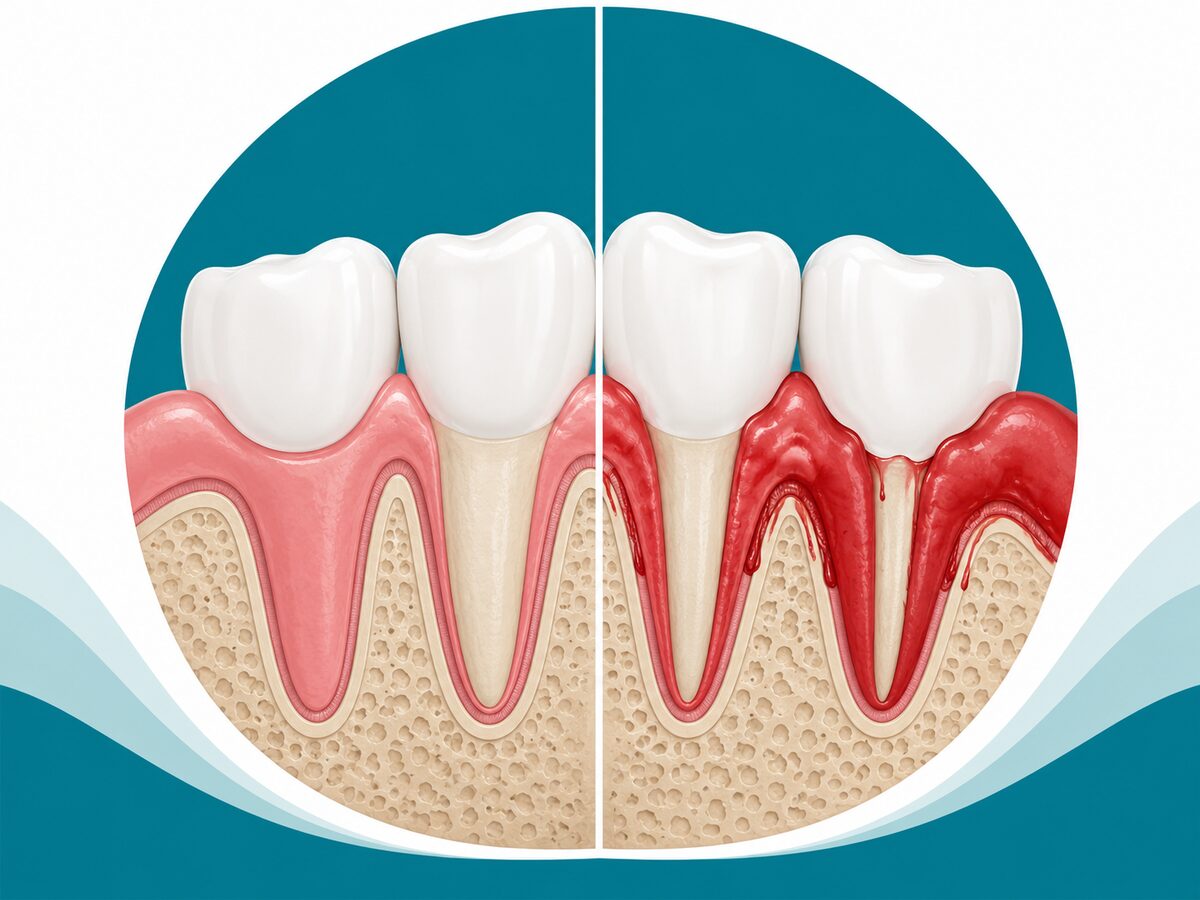
Bleeding gums causes are usually simpler than people fear, but they're also a warning you shouldn't ignore. That pink in the sink when you brush is most often early gum inflammation from plaque, and it's reversible if you act. Here are the 7 real reasons gums bleed and when it's time to see a dentist.
What does bleeding gums actually mean?
Healthy gums don't bleed when you brush. So if yours do, your body is telling you something. In most cases, bleeding gums are caused by plaque building up along the gumline, which irritates the tissue and makes it inflamed. The good news is that this early stage, called gingivitis, is fully reversible. The not-so-good news is that ignored, it can creep toward something more serious.
Let's go through the common causes so you can match what's happening in your mouth to the likely reason.
7 common bleeding gums causes
Here are the reasons we see most often.
1. Plaque and tartar buildup. The number one cause. Soft plaque hardens into tartar along the gumline, and your gums react by becoming red, puffy, and quick to bleed.
2. Brushing too hard or wrong technique. A hard brush and an aggressive sawing motion damage the gums rather than clean them. Gentle circles with a soft brush do a better job.
3. Skipping flossing, then starting suddenly. If you haven't flossed in months and start again, the gums may bleed for the first few days. That settles as they get healthier, so don't quit.
4. Gum disease (periodontitis). When gingivitis is left alone, it can advance to deeper gum disease that affects the bone holding your teeth. Bleeding here often comes with bad breath and gums pulling away from the teeth.
5. Hormonal changes. Pregnancy, puberty, and monthly cycles can make gums more sensitive and prone to bleeding for a while.
6. Certain medicines. Some blood thinners and other medications make gums bleed more easily. Worth mentioning to your dentist if this is you.
7. Vitamin deficiency or general health issues. Low vitamin C or certain conditions like uncontrolled diabetes can show up first as bleeding gums. Diabetes and gum disease feed each other, in fact, which is why dentists ask about it.
What you can do at home
For early, mild bleeding from plaque, the fix is mostly in your daily habits. Brush twice a day for two full minutes with a soft brush, using gentle circular strokes rather than hard scrubbing. Floss once a day to clean the spots your brush can't reach, which is where gum trouble usually starts. Rinse with warm salt water to soothe inflamed tissue.
Give it a week or two of consistent, gentle care. Mild gingivitis often improves noticeably in that time. But here's the honest limit. Once tartar has hardened onto the teeth, no amount of brushing removes it. That part needs a professional cleaning, and trying to scrape it yourself only damages the gum.
When brushing isn't enough
If the bleeding doesn't ease after a couple of weeks of good home care, the buildup has likely gone beyond what you can manage at home. A professional scaling removes the hardened tartar above and below the gumline, and the gums usually settle quickly afterwards. Our general dentistry checkups include exactly this kind of cleaning and assessment.
How long does it take for gums to heal?
Here's a fair expectation. Mild gingivitis often looks better within a week or two of proper brushing and flossing, with the bleeding fading first. After a professional scaling, gums usually firm up and stop bleeding within a few days to a couple of weeks. Deeper gum disease takes longer and may need more than one visit, plus a recall cleaning every few months to keep it in check. The earlier you start, the quicker and simpler that whole timeline becomes.
When should you see a dentist?
Some bleeding is a minor nudge to brush better. Some is a real red flag. Book a visit if the bleeding keeps happening despite good home care for two weeks, if your gums are swollen, tender, or red, if they're receding so teeth look longer, if you have persistent bad breath, or if any teeth feel loose. Loose teeth in an adult are never normal and need attention soon.
Deeper or advanced gum problems are best handled with proper periodontal treatment, which goes beyond a standard cleaning to treat infection below the gumline and protect the bone around your teeth. Caught early, gum disease is very manageable, and gum disease treatment at this stage is usually just a deep cleaning and better home care. Left late, it's the leading cause of adult tooth loss, so timing matters.
If you've been searching gum treatment Lucknow online, the first step is always an honest assessment of how far things have gone. Sometimes a single scaling does the job. Sometimes deeper treatment is needed below the gumline. Either way, you'll know exactly where you stand, and you can book that assessment through our contact page whenever the bleeding has you worried.
A sensible way to decide
Bleeding gums are usually your mouth's early warning that plaque is building up, and at that stage gentle brushing, daily flossing, and a professional cleaning turn things around. Don't brush it off, literally or figuratively. If the bleeding sticks around past two weeks, or comes with swelling, bad breath, or loose teeth, get it checked before it becomes the harder, deeper problem it can grow into.
Frequently Asked Questions
Are bleeding gums always a sign of gum disease?
Not always, but they're usually a sign of gum inflammation, which is the start of it. Plaque buildup is the most common cause, and at that early stage it's fully reversible with good cleaning. Bleeding that continues for weeks, though, suggests it's advancing and needs a dentist's attention.
Should I stop flossing if my gums bleed?
No, keep going. If you've recently started flossing after a long gap, some bleeding for the first few days is normal as your gums adjust. It usually settles within a week as the gums get healthier. Stopping lets plaque build right back up, which is the actual problem.
Can bleeding gums heal on their own?
Early, mild bleeding from plaque can improve within a week or two of gentle brushing and daily flossing. But once tartar has hardened onto the teeth, home care can't remove it and the gums won't fully settle until a dentist cleans it off. So sometimes yes, often you'll need a professional cleaning.
Is there a link between bleeding gums and diabetes?
Yes, and it runs both ways. Uncontrolled diabetes makes gum disease more likely and harder to control, while gum infection can make blood sugar tougher to manage. If you have diabetes and notice bleeding gums, it's worth telling both your dentist and doctor so they can keep an eye on both.