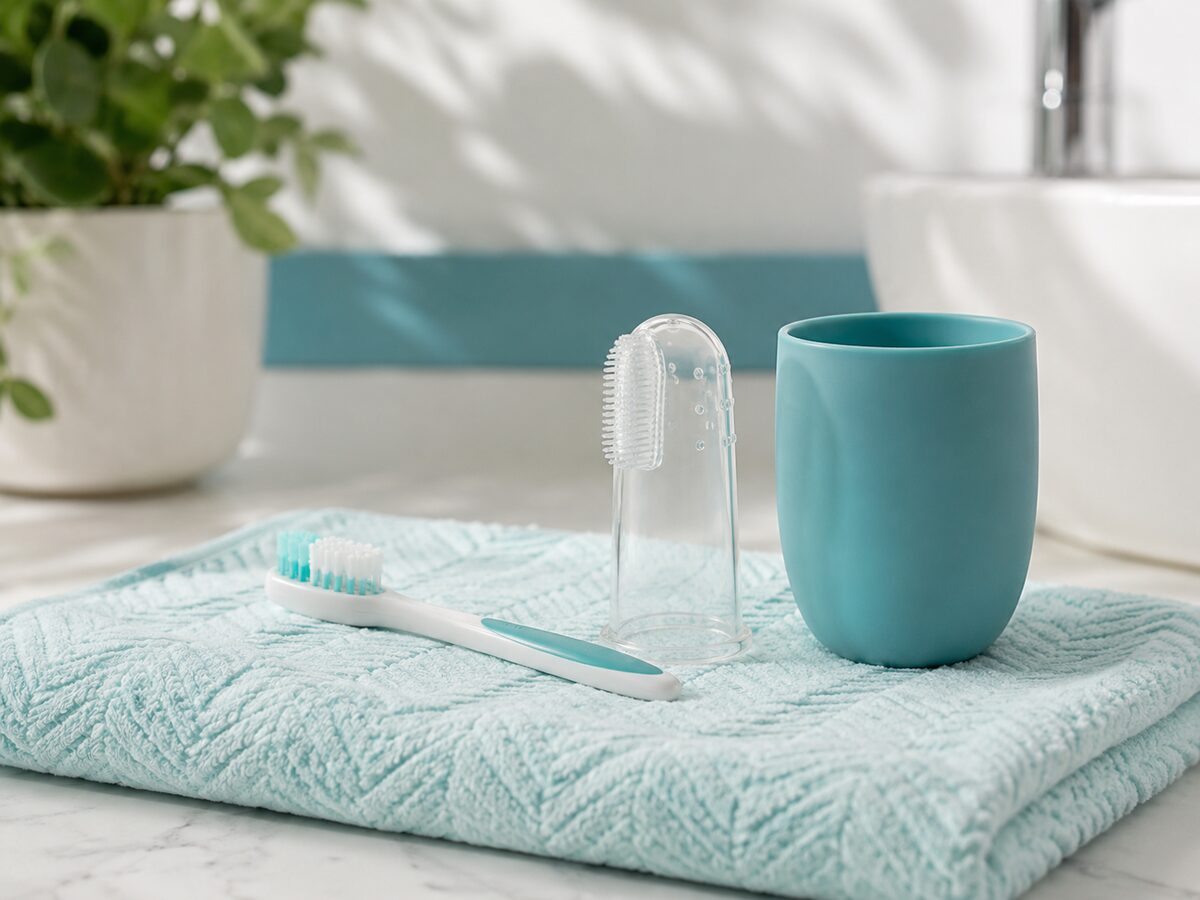
Baby teeth care starts before the first tooth even shows up. Wipe the gums, switch to a soft brush when teeth arrive, and book the first dental visit by your child's first birthday. Here's the whole 0 to 5 stretch, broken down by age, so you always know what to do next.
Why baby teeth care matters even though they fall out
People assume milk teeth don't count because they're temporary. They count. Those tiny teeth hold space for the adult ones, help your child chew and speak clearly, and decay in them can spread pain and infection just like in adult teeth. Good baby teeth care in these early years sets up the permanent teeth that follow, which is why your child's first teeth deserve real attention from day one. A cavity at 3 isn't harmless. It can mean a frightened child, a sleepless night, and sometimes an extraction that shifts everything underneath.
So let's go stage by stage.
Birth to 6 months: before the first tooth
No teeth yet, but the mouth still needs attention. After feeds, wipe your baby's gums with a clean, damp cloth wrapped around your finger. This clears milk residue and gets your little one used to the feeling of mouth cleaning. Do it once in the morning and once before bed.
Here's the big one for this stage. Never put your baby to sleep with a bottle of milk or juice in the mouth. The sugar pools around the gums all night and feeds the bacteria that cause what dentists call bottle decay. Water at bedtime is fine. Milk is not.
6 to 12 months: the first tooth arrives
The bottom front teeth usually push through somewhere around 6 months, though some babies start at 4 and others at 10. Both ranges are normal. Once that first tooth shows, switch to a soft baby toothbrush. Use a smear of fluoride toothpaste, about the size of a single grain of rice. That's it. A tiny amount.
Teething brings drooling, sore gums, and a baby who wants to chew everything. A clean, chilled (not frozen) teething ring helps. So does gently rubbing the gum with a clean finger. If there's high fever or diarrhoea, that's not teething, that's a reason to see your paediatrician.
When should the first dental visit happen?
By the first birthday, or within 6 months of the first tooth appearing, whichever comes first. A lot of Lucknow parents wait until age 4 or 5, usually when something already hurts. That's too late for a first visit. An early checkup is short, gentle, and mostly about catching problems before they start. If you're looking for the right clinic, our guide on finding a kids' dentist in Lucknow walks through what to check before you book.
1 to 3 years: more teeth, more independence
By age 3, most children have all 20 milk teeth. Brush twice a day, morning and night, with that rice-grain smear of toothpaste. You're still the one brushing at this age. Toddlers want to do it themselves, and you can let them have a go, but follow up and brush properly yourself. Their hands can't reach the back teeth well yet.
Sugar is the thing to watch now. Biscuits, juice, chocolate, and the constant snacking that comes with toddlerhood. It's not just how much sugar, it's how often. A mouth that's bathed in sugar all day never gets a break. Try to keep sweets to mealtimes rather than spread across the whole day, and offer water between meals instead of juice.
3 to 5 years: building the habit
Now you can bump the toothpaste up to a pea-sized amount. Teach your child to spit, not swallow. Kids around this age can start brushing with more independence, but supervise until they're about 7, when their hand coordination catches up. A common case we see is a 5 year old who has been brushing alone for a year, with a row of cavities along the gumline because nobody checked the technique.
This is also the stage where habits like thumb sucking or prolonged pacifier use can start to affect how the teeth and jaw line up. Most children drop these on their own. If it carries past age 4, mention it at a checkup. And if you ever spot a white or brown spot on a tooth, don't wait. Get it looked at. Early decay can sometimes be stopped before it becomes a hole. Our paediatric dentistry page covers the gentle, child-friendly approach we use for exactly these small problems.
A few things that trip parents up
Two quick myths worth clearing, since so much of good kids dental care is just avoiding the wrong advice. First, fluoride toothpaste in the tiny amounts above is safe and recommended for kids, not something to avoid. Second, a chipped or knocked baby tooth still needs a dentist's eye, because the permanent tooth growing underneath can be affected. If your child takes a knock to the mouth, ring the clinic the same day.
Want the short version of the whole 0 to 5 plan? Wipe gums before teeth. Brush with the right tiny amount of fluoride paste the moment teeth appear. No bottle in bed. First dental visit by age 1. Keep sugar to mealtimes. Supervise brushing until 7. Do these and you've handled the hard part. For anything that worries you in between, you can always reach the clinic and ask.
Frequently Asked Questions
When should my baby's first tooth come in?
Usually around 6 months, but anywhere from 4 to 10 months is completely normal. The bottom two front teeth tend to arrive first. If nothing has shown by 12 months, it's worth a quick mention at a checkup, though late teething is often just a family trait.
How much toothpaste should I use for a toddler?
From the first tooth to age 3, use a smear the size of a grain of rice. From 3 to 6, you can go up to a pea-sized amount. Always use fluoride toothpaste in these small amounts, and teach your child to spit rather than swallow.
Is it really necessary to fix cavities in baby teeth?
Yes. Decay in a milk tooth can cause pain, infection, and trouble eating, and it can damage the permanent tooth forming underneath. Baby teeth also hold space for adult teeth, so losing one early can crowd the bite later. Get any spot or hole checked rather than waiting for it to fall out.
When should I take my child for their first dental visit?
By the first birthday, or within 6 months of the first tooth coming through. The visit is short and gentle, mostly about prevention and getting your child comfortable with the dentist. Starting early makes every visit after it easier.