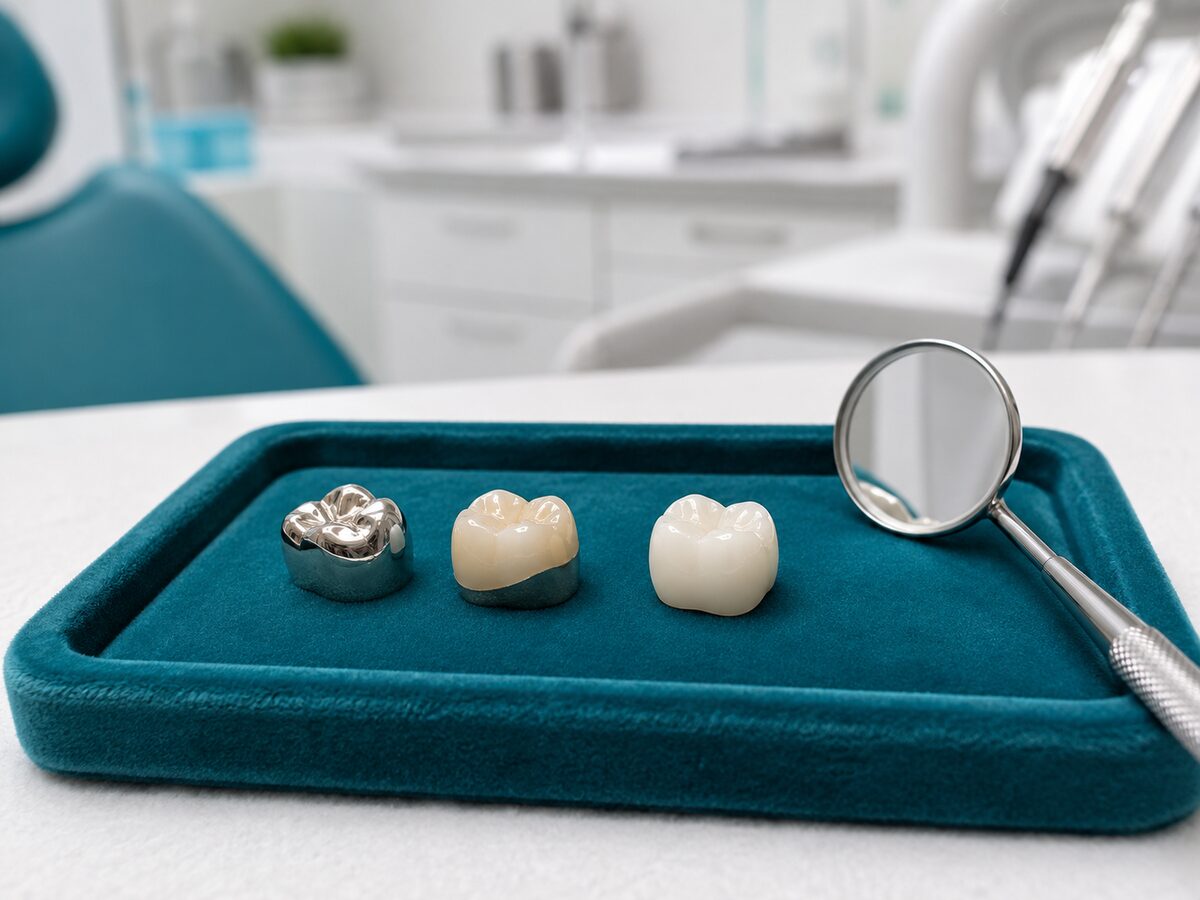
The dental crown cost in Lucknow ranges from about ₹3,000 to ₹15,000, and the number you land on depends almost entirely on the material. A basic metal crown sits at the bottom. A zirconia crown sits at the top. Here's how metal, PFM, and zirconia compare so you can choose without overpaying.
What is the dental crown cost in Lucknow?
Across materials, the dental crown cost in Lucknow runs from roughly ₹3,000 to ₹15,000 per crown. The cheapest are full metal crowns. In the middle sit porcelain-fused-to-metal crowns, known as PFM. At the top is zirconia, the all-ceramic option that looks the most natural. The material you pick is what moves the price most.
So which one's right for you? It depends on where the tooth sits and how much it shows when you smile.
| Option | Typical Cost (Lucknow) |
|---|---|
| Full metal crown | ₹3,000 to ₹6,000 |
| PFM (porcelain fused to metal) | ₹5,000 to ₹9,000 |
| Zirconia crown | ₹8,000 to ₹15,000 |
| All-ceramic / E-max (front teeth) | ₹10,000 to ₹15,000 |
Metal, PFM, and zirconia compared
Metal crowns are hard to damage. They rarely chip and they're kind to the opposing teeth, which makes them a sensible pick for back molars where nobody can see them. The only real downside is the colour. They're metallic, so they're a no-go for anything in your smile line.
PFM crowns try to get the best of both. A metal core for strength, a porcelain coating for a tooth-like look. They've been the standard for years. Two drawbacks to know: a thin dark line that can show at the gum over time, and porcelain that can chip. Still, for the price, they balance looks and cost reasonably well.
Zirconia is the third option. It's all ceramic, so no metal underneath, which means no dark line and a colour that matches real teeth closely. It's strong too, strong enough for molars. The zirconia crown price is the highest of the three, but for front teeth or for anyone who wants the most natural finish, it's usually worth the extra.
Which crown lasts longest?
All three can last 10 to 15 years or more with good care. Metal often lasts the longest because it simply doesn't chip. Zirconia is close behind and looks far better. PFM can need replacing sooner if the porcelain layer chips. So lifespan and looks pull in slightly different directions, and your choice depends on which matters more for that particular tooth.
Why might you need a crown?
Crowns cap a tooth that's too damaged for a filling. Common reasons include a large cavity, a cracked tooth, or a tooth that's just had root canal treatment and turned brittle. In fact, most crowns go on after an RCT, because a treated tooth needs that protective cap to survive normal chewing. If your dentist has mentioned both, our page on root canal treatment explains why the crown usually follows the canal work.
Crowns also anchor bridges. If you're replacing a missing tooth with a bridge, the teeth on either side get crowned to hold it. You can read how that fits together on our crown and bridge page, which covers the sittings involved and how the fit is checked.
What else moves the price?
Material matters most, but a few other things count too. The lab that makes the crown affects quality and cost. The number of crowns you need at once can change the per-unit price. And whether the tooth needs other work first, like a post inside a root-canalled tooth, adds to the total. One crown on its own is a small job. A crown that also needs a build-up and a post costs more because there's more to do.
Your exact cost depends on an examination. The dentist has to see how much tooth is left, whether it needs a build-up, and which material suits the position. So any number quoted before a checkup is only a starting range. For an accurate figure, book a quick examination and you'll get a clear quote.
How to make a crown last
A crown costs money, so look after it. Brush and floss around it like any other tooth, because decay can still start where the crown meets the gum. Don't use that tooth to crack nuts or open things, since even tough crowns can chip under that kind of abuse. If you grind your teeth at night, ask about a night guard, because nightly grinding wears crowns down and shortens their life.
Regular checkups catch a loose crown or a problem underneath before it becomes a bigger, costlier fix. A crown that's well cared for easily reaches the upper end of its lifespan.
Does the cheapest crown cost you more later?
Sometimes. A metal crown on a back molar is a sensible, low-cost choice, not a compromise. But picking a cheap PFM for a front tooth to save money often disappoints, because the look matters there and a dark gum line is hard to ignore. Pick the material that suits where the tooth sits and how it gets used.
What to budget for each material
Budget ₹3,000 to ₹6,000 for metal, ₹5,000 to ₹9,000 for PFM, and ₹8,000 to ₹15,000 for zirconia. Use metal where nobody sees it, zirconia where everyone does, and PFM when you want a balance. Choose the material for the specific tooth, not just the lowest price on the list.
Frequently Asked Questions
Is a zirconia crown worth the extra cost?
For front teeth and visible areas, usually yes. The zirconia crown price is higher, but you get a natural colour with no dark gum line and real strength. For a back molar nobody sees, a cheaper metal crown often makes more sense. Where the tooth sits decides it.
How long does a dental crown last?
Most crowns last 10 to 15 years, and many go longer with good brushing and regular checkups. Metal tends to last the longest because it doesn't chip. PFM may need replacing sooner if the porcelain layer breaks. Avoiding very hard foods on a crowned tooth helps it last.
Do I need a crown after a root canal?
In most cases, yes, especially on back teeth. A root-canalled tooth becomes brittle and can crack under normal chewing without a crown to protect it. Skip the crown and the tooth often cracks beyond saving, and replacing it costs much more than the crown would have.
Why are some crowns so much cheaper?
The material and the dental lab explain most of it. A basic metal crown is far cheaper than zirconia, and a low-end lab costs less than a good one. A very cheap quote may also leave out things like a post or build-up the tooth actually needs. Ask what's included.