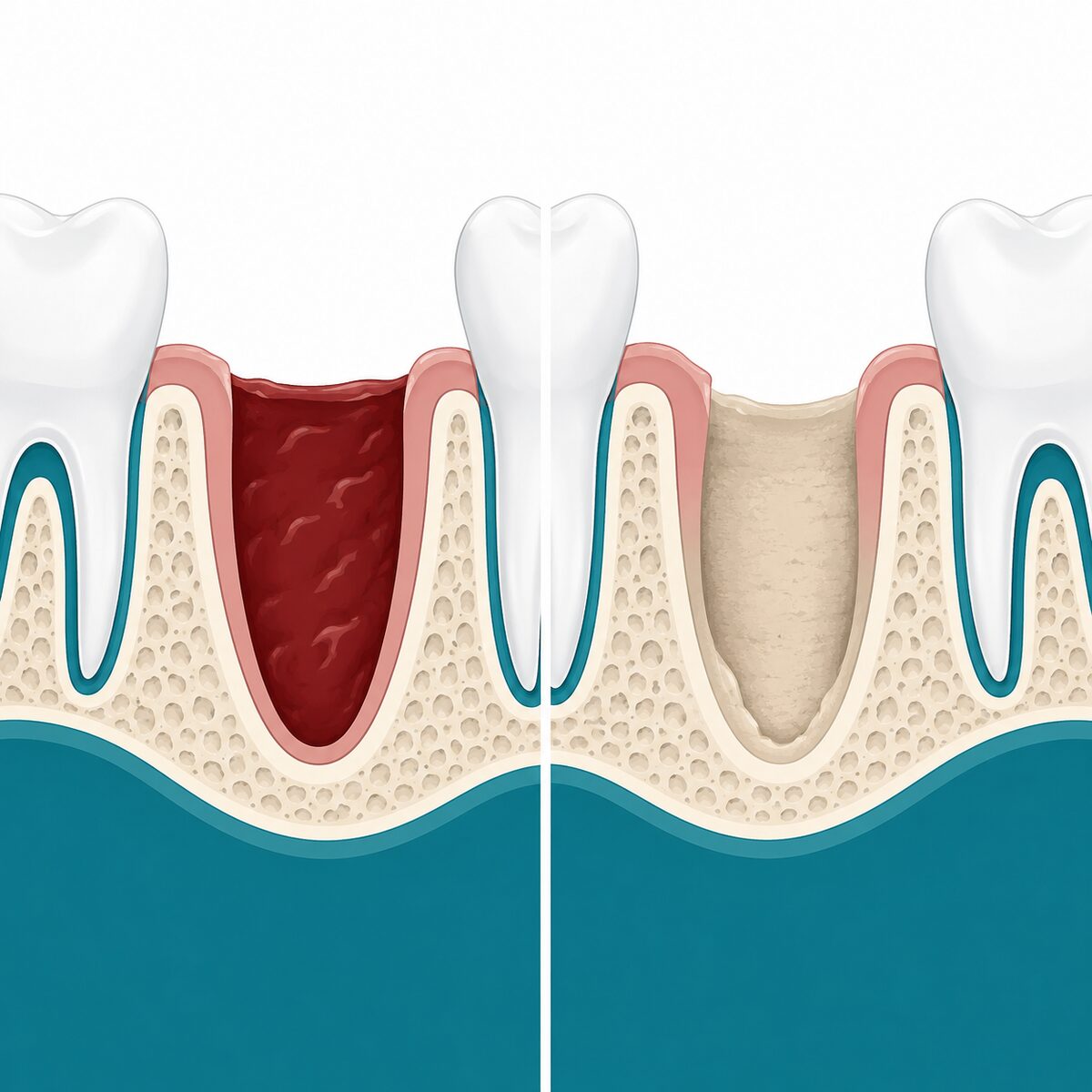
Dry socket symptoms usually appear 2 to 4 days after a tooth comes out: a deep, throbbing ache that can spread to your ear, often with a bad taste or smell. It happens when the protective blood clot is lost too early. The good news is a dentist can settle the pain quickly.
Dry socket symptoms and what they feel like
You had a tooth pulled, the first day or two went fine, and then around day 3 the pain came roaring back, worse than before. That's the classic pattern of dry socket, and it catches people off guard precisely because they thought the worst was over. The hallmark dry socket symptoms are a deep, throbbing ache that radiates toward your ear, jaw, or temple on the same side, often paired with a bad taste and an unpleasant smell from the empty socket.
Normal healing hurts less each day. Dry socket does the opposite. So if your after tooth extraction pain is getting worse instead of better around the third day, that's your signal.
Why it happens
When a tooth is removed, a blood clot forms in the socket like a natural bandage. It protects the bone and nerve underneath while new tissue grows. Dry socket is what happens when that clot dislodges or dissolves too early, leaving the bone and nerve endings exposed to air, food, and saliva. That exposure is what causes the sharp, deep pain.
A few things raise the risk:
- Smoking. The suction and the chemicals both disturb the clot. This is the single biggest cause.
- Drinking through a straw, spitting forcefully, or vigorous rinsing in the first 2 days.
- Lower wisdom tooth extractions, which are more prone to it than other teeth.
- Disturbing the area with your tongue or finger.
It's worth saying clearly. Dry socket is not an infection, though it can feel just as bad. It's an exposed, unprotected socket, and that distinction matters because the treatment is different.
How a dentist treats dry socket
This is the reassuring part. You don't have to ride it out. Treatment is quick and the relief is often dramatic.
At the clinic, we gently clean out the socket to clear any debris, then pack it with a medicated dressing that soothes the exposed bone and dulls the pain almost straight away. Many people walk in miserable and leave comfortable. The dressing may need changing once or twice over the following days as the area heals. We'll also sort out pain relief and, if there's any sign of infection, address that too.
So if you suspect dry socket, the move is simple. Don't double up on painkillers and suffer through it. Get seen. A 15-minute appointment usually fixes what days of tablets won't. And no, the socket isn't going to stay open forever. Once the dressing calms the pain, the area heals over the following days and weeks just like a normal extraction would, only a little behind schedule.
How to avoid it in the first place
Most dry sockets are preventable with care in the first 48 hours. After any extraction, especially a surgical or oral surgery case, follow these:
- No smoking for at least 3 days, ideally longer. This matters more than anything else.
- No straws, no spitting, no swishing hard for the first 2 days. Let water fall out of your mouth gently instead of rinsing.
- Eat soft, cool foods and chew on the other side.
- Keep your tongue and fingers away from the socket, however tempting it is to poke.
- From day 2, rinse very gently with warm salt water after meals.
A note for our extraction patients
Whenever we remove a tooth here, we send you home with clear extraction aftercare instructions and our number. Patients across Lucknow, from Indira Nagar to IIM Road, sometimes hesitate to call about pain, thinking they're being a bother. Please don't. A quick call on day 3 about new pain is exactly what we want, and dry socket is far easier to settle early.
It's also worth knowing what dry socket is not. A bit of oozing on the first day, some swelling that peaks around day 2, and tenderness that eases as the days pass are all normal parts of healing. Those don't mean anything has gone wrong. Dry socket is specifically the deep ache that arrives late and worsens, usually with that foul taste. If you can tell the two apart, you'll worry far less and call at the right moment.
When to call
Reach out if pain worsens after day 2 or 3, if you taste or smell something foul from the socket, if the ache spreads to your ear, or if you develop fever or swelling. Fever and spreading swelling can point to infection rather than simple dry socket, and either way it needs checking.
Wrapping up
Dry socket is pain that gets worse when it should be getting better, usually 2 to 4 days after an extraction, because the protective clot was lost early. It's not dangerous, but it's genuinely painful, and it's very treatable. Skip the smoking and straws, be gentle for 48 hours, and if that deep throbbing shows up, get it checked rather than toughing it out.
Frequently Asked Questions
When does dry socket usually start?
Most commonly 2 to 4 days after the tooth is removed. That's the telltale sign: the first day or two feel manageable, then the pain suddenly intensifies instead of fading. If your discomfort is steadily improving day by day, you're almost certainly healing normally rather than developing dry socket.
Is dry socket the same as an infection?
No, though they can feel similar. Dry socket is an exposed socket caused by the protective blood clot being lost too early, not a bacterial infection. The treatments differ, which is why it's best to have a dentist confirm what's going on. Fever and spreading swelling lean more toward infection and need prompt attention.
Can I treat dry socket at home?
Home care like gentle salt-water rinses and avoiding smoking can ease things slightly, but it won't truly fix it. The fast relief comes from a dentist cleaning the socket and placing a medicated dressing over the exposed bone. Most people feel dramatically better within minutes of that dressing going in.
How can I prevent dry socket after an extraction?
The biggest factors are avoiding smoking and not using straws, spitting, or rinsing hard for the first couple of days, since all of these can dislodge the clot. Eat soft foods, chew on the other side, and keep your tongue away from the area. Following your aftercare instructions closely makes dry socket far less likely.