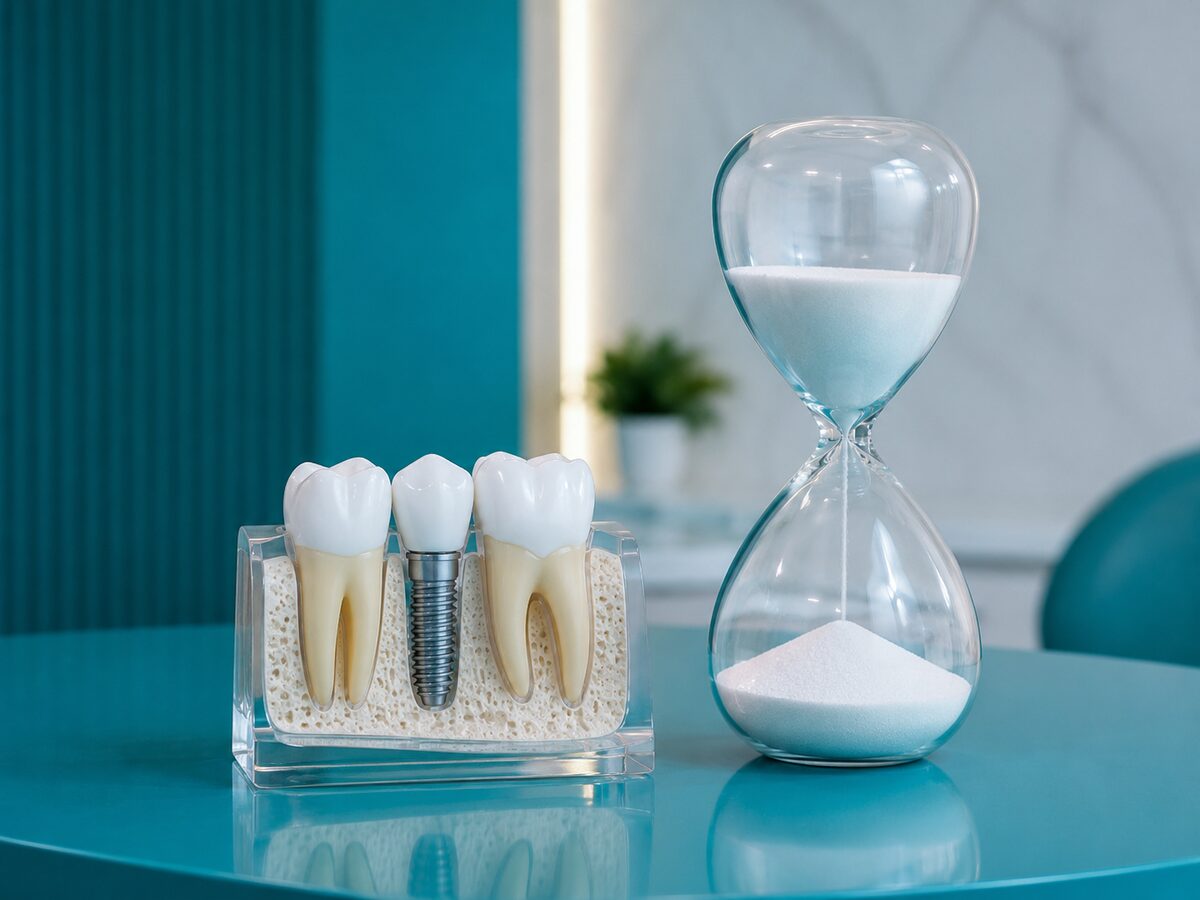
How long do dental implants last? The honest answer is in two parts. The titanium post in the bone often lasts a lifetime, while the crown on top usually runs 15 to 25 years before it needs replacing. With good care, many people never need another one. Here's what those numbers really depend on.
How long do dental implants last, really?
Let's split the implant into its two parts, because they don't wear out at the same rate. The implant itself is a titanium screw placed in your jawbone. Once it fuses with the bone, it can last 20, 30 years, often the rest of your life. Studies report success rates above 90% even after 15 years. The crown on top, the visible white tooth, takes the daily beating of chewing, so it tends to last 15 to 25 years before it chips, wears, or needs swapping.
So when someone asks how long dental implants last, the fair reply is: the foundation is usually permanent, the top may need refreshing once in a few decades. That's a very different proposition from a bridge or denture, which you replace more often. For where implants fit against the alternatives, our dental implants page lays it out.
Why the range is so wide
15 to 25 years for the crown, lifetime for the post, that's a big spread, and the implant lifespan you actually get sits somewhere inside it. The difference comes down to a handful of things, and most of them are in your hands.
The biggest factor is how well you care for it. An implant can still get gum disease around it, called peri-implantitis, which is the leading cause of implants failing years down the line. Bone supports the implant, and if the gum around it gets infected and the bone recedes, the implant loosens. So daily cleaning and regular checkups aren't optional extras. They're what carries the implant to the 25-year mark and beyond.
What shortens an implant's life
A few things cut into how long an implant lasts. Worth knowing them, because most are avoidable.
- Poor cleaning. Plaque around the implant leads to peri-implantitis, the same way it leads to gum disease around natural teeth. This is the number one killer of implants.
- Smoking. Tobacco slows healing and roughly doubles the failure risk, because it starves the gum and bone of blood. Our piece on implant care touches on why dentists ask smokers to pause.
- Uncontrolled diabetes. High blood sugar affects healing and gum health, which works against the implant.
- Teeth grinding. Clenching and grinding at night put heavy load on the implant and can crack the crown. A night guard sorts this.
- Skipping checkups. Problems around an implant are easy to fix early and hard to fix late. Miss the checkups and small issues become big ones.
None of these are dramatic. They're the everyday stuff. And that's the point, the implant's lifespan is mostly decided by ordinary habits, not by some flaw in the implant.
What you control, what you don't
Some factors sit with the dentist and the planning, not you. The implant brand matters, established Swiss and German systems have decades of track record. So does the surgeon's skill, the quality of your jawbone, and whether the bite was balanced correctly. This is why the implant procedure and its timeline matter so much. A well-placed implant in healthy bone, allowed to heal fully, is one that lasts. A rushed one isn't. Worth choosing carefully at the start, because the foundation is the part you can't easily redo.
Does the cost reflect the lifespan?
Often, yes, though not always. A cheaper implant isn't automatically a worse one, but a quote far below the Lucknow range usually means a lower-grade system or something left out of the plan. You can see real figures in our breakdown of dental implant cost in Lucknow, where a single tooth runs ₹25,000 to ₹50,000. Spread over 20-plus years, even the higher end works out to a small yearly cost for a tooth that functions like the real thing.
How to make yours last
Here's the short version of getting decades out of an implant. Brush and clean around it twice a day, including with floss or a small interdental brush. Come in for checkups twice a year so the gum and bone get monitored. Don't smoke. Wear a night guard if you grind. Keep diabetes in check if you have it. Do these, and there's every chance your implant outlives the warranty on everything else you own.
It helps to think of an implant the way you'd think of a good pair of shoes resoled over the years. The structure holds, and small parts get refreshed as they wear. A crown swap after 20 years isn't a failure. It's normal upkeep on something built to last. Compare that to a denture you replace every 5 to 7 years, or a bridge that puts strain on the teeth beside it, and the implant's long run starts to look like good value, not an extravagance.
No dentist can promise an implant lasts forever, and anyone who guarantees it is overselling. What's fair to say is that implants are the longest-lasting tooth replacement available, and the care you put in does more for that number than anything else. If you're weighing one up, a checkup and X-ray will tell you whether your jaw is ready for it.
Frequently Asked Questions
Do dental implants last a lifetime?
The titanium post in the bone often does, lasting 20 to 30 years or more with good care. The crown on top usually needs replacing after 15 to 25 years because of normal chewing wear. So the foundation tends to be permanent while the visible tooth may be refreshed once over the decades.
What is the main reason implants fail?
The most common cause is peri-implantitis, a gum infection around the implant that leads to bone loss and loosening. It's driven by poor cleaning, much like gum disease around natural teeth. Smoking, uncontrolled diabetes, and grinding also raise the risk, but daily cleaning and regular checkups prevent most failures.
Can I get a cavity in a dental implant?
No, the implant and crown are artificial, so they can't decay like a natural tooth. But the gum and bone around the implant can still get infected if plaque builds up. That's why cleaning around an implant is just as important, even though the implant itself won't rot.
Does smoking really affect how long an implant lasts?
Yes, significantly. Smoking reduces blood flow to the gum and bone, which slows healing and roughly doubles the chance of the implant failing. Many dentists ask you to pause smoking before and after the surgery, and quitting altogether gives the implant its best shot at lasting decades.