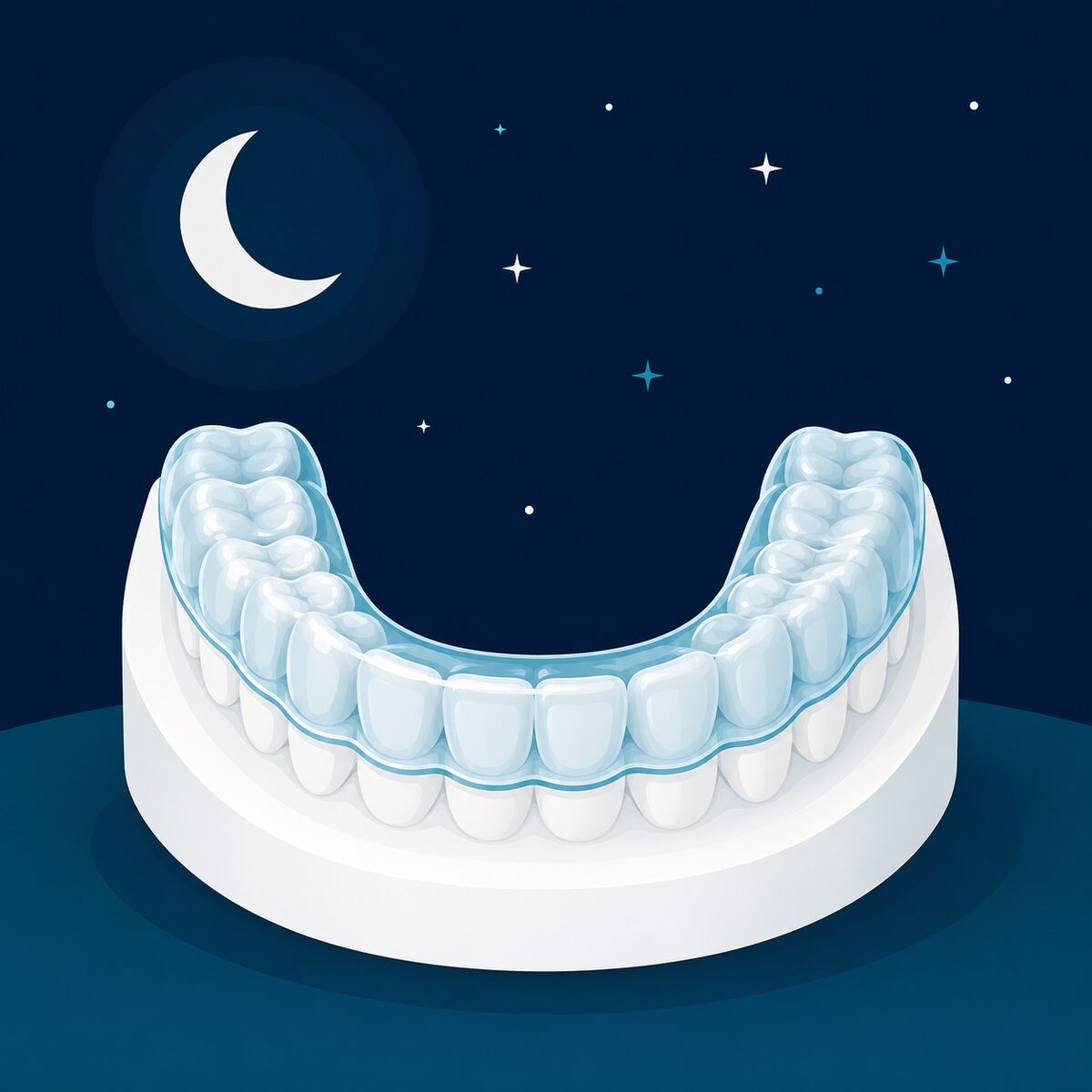
Teeth grinding treatment is mostly about protecting your teeth while you sleep and easing whatever's driving the grinding. If you wake up with a tight, sore jaw or a dull headache, bruxism is the likely culprit. A custom night guard plus a few habit changes stops most of the damage.
Why your jaw hurts in the morning
You wake up and your jaw feels tight. Maybe there's a dull ache near your ears, or a headache that fades by lunch. You haven't injured anything. So what's going on? Most likely you're grinding or clenching your teeth in your sleep, a condition called bruxism, and your jaw muscles have been working out all night without you knowing.
The frustrating part is that you can't catch yourself doing it. It happens while you're unconscious. That's why teeth grinding treatment focuses on protection and the underlying triggers rather than just telling you to stop, which doesn't work when you're asleep.
The signs you're grinding
Bruxism symptoms tend to show up in clusters. See how many of these sound familiar.
- A sore, tired, or tight jaw when you wake up.
- Dull headaches around the temples, especially in the morning.
- Teeth that look flattened, worn, or chipped at the edges.
- Sensitivity to hot and cold that's crept in for no obvious reason.
- A partner who's heard you grinding at night (the sound carries, ask them).
- Clicking or aching in front of the ears when you chew or yawn.
That last one points to the jaw joint itself, and persistent jaw pain causes that go untreated can stiffen the joint over time. So it's worth getting checked early rather than waiting for it to settle on its own.
What's actually causing it
Bruxism rarely has one neat cause. Usually it's a mix.
Stress and anxiety sit at the top of the list. A tense mind clenches a tense jaw, and most people grind more during stressful stretches at work or home. Sleep issues like snoring and disturbed breathing are strongly linked too. A bite that doesn't meet evenly, where some teeth hit before others, can set off grinding as well. And caffeine, smoking, and alcohol late in the day all make it worse.
Knowing your trigger helps, because removing it is half the treatment. But even while you sort out the cause, your teeth need protecting tonight.
Teeth grinding treatment that works
Here's how we approach it, from simplest to most involved.
A custom night guard. This is the mainstay. It's a thin, comfortable splint moulded to your teeth that you wear while sleeping. It doesn't stop you grinding, but it takes the force so your teeth don't. The cheap one-size guards from a chemist help a little, but a fitted one from the clinic lasts far longer and actually fits your bite. We take an impression during a routine general dentistry visit and it's ready in a few days.
Treating the worn or cracked teeth. If you've been grinding for years, some teeth may already be flattened, cracked, or sensitive. Those often need a filling, or in worse cases a crown to rebuild and protect the tooth. Fixing the worn surfaces also helps your bite meet evenly again.
Tackling the trigger. Cutting evening caffeine, winding down properly before bed, and managing stress all reduce how hard you grind. Some people benefit from simple jaw stretches and warm compresses for muscle relief.
A quick word on stress in Lucknow life
We see a lot of working professionals from Gomti Nagar and Hazratganj whose grinding flares up during exam season, deadlines, or family events. It's not in your head, it's in your jaw, and it's common. The night guard buys protection while you handle the rest of your life.
When to get it checked
Book a visit if your jaw pain is daily, if you notice clicking or locking when you open wide, if your teeth look visibly worn, or if morning headaches have become routine. Left alone, severe bruxism can crack teeth, wear them down to stubs, and strain the jaw joint for years. Caught early, a simple guard usually settles it. You can book a checkup and we'll take a quick look at the wear pattern on your teeth, which tells us a lot before you've said a word.
One question we hear often: can children grind too? Yes, plenty do, especially around the age teeth are changing, and most grow out of it without treatment. It's usually only worth acting on if a child's teeth are visibly worn or they're complaining of jaw pain. For adults, persistent grinding rarely fixes itself, so it's the group that benefits most from a guard.
Think of it this way
Morning jaw ache and worn teeth almost always point to night-time grinding. You can't will yourself to stop in your sleep, so the answer is a custom night guard to absorb the force, plus easing whatever's winding you up. If your jaw's been sore for weeks, don't push through it. Get it checked and protect those teeth before the damage adds up.
Not sure if your jaw pain is from grinding or something else? Book a quick checkup and get a clear answer instead of guessing. A worn bite shows up clearly on examination, and catching it early keeps the fix simple.
Frequently Asked Questions
How do I know if I grind my teeth at night?
The usual giveaways are waking with a tight or sore jaw, morning headaches, and teeth that look flattened or chipped. A bed partner may also hear the grinding sound. Since it happens while you sleep, you often won't catch yourself, so a dentist checking your teeth for wear is the surest way to confirm it.
Will a night guard stop me from grinding?
Not exactly. A night guard doesn't stop the grinding action itself, but it absorbs the force so your teeth and jaw take far less of the damage. It's the most reliable way to protect your teeth while you and your dentist work on the cause, whether that's stress, your bite, or sleep habits.
Is a chemist mouthguard as good as a custom one?
It's better than nothing for a short while, but it doesn't fit your bite properly, often feels bulky, and wears out fast. A custom guard moulded to your teeth is more comfortable, stays in place, and lasts much longer. For ongoing grinding, the fitted version is well worth it.
Can teeth grinding damage be reversed?
The grinding itself can be controlled, but teeth that are already worn or cracked don't grow back. Those can be rebuilt with fillings or crowns to restore the shape and protect them. The sooner you start protecting the teeth, the less rebuilding you'll need later, which is why early treatment pays off.