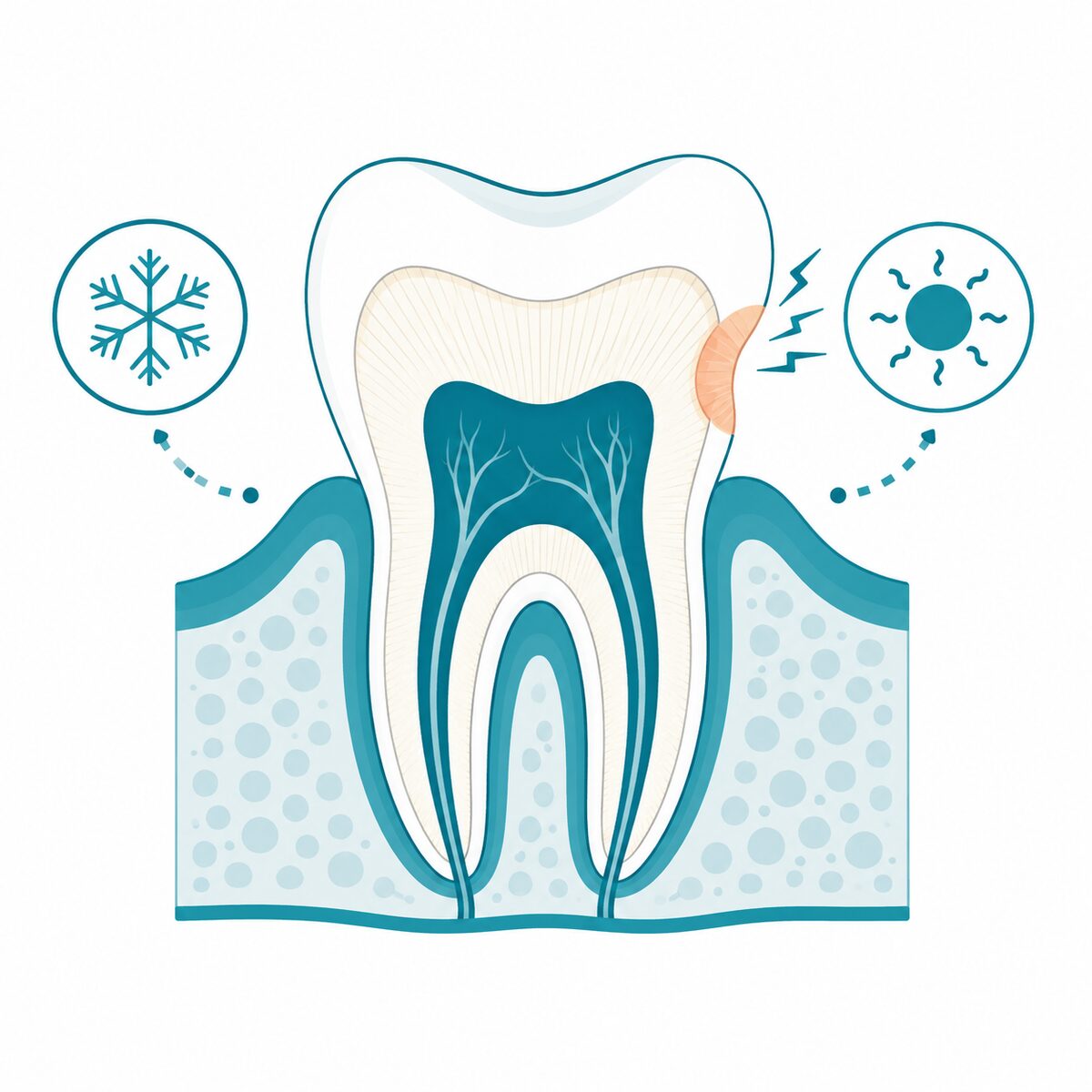
Sensitive teeth treatment starts with one question: what's actually causing it? If a sip of cold water or a bite of ice cream sends a sharp twinge through your tooth, you already know the feeling. Sensitive teeth treatment depends entirely on why it's happening, and there are a few usual reasons. Here's what causes that zing, what you can do at home, and when it's time to let a dentist look.
What are the real teeth sensitivity causes?
That sharp, sudden pain comes from one thing: the soft inner layer of your tooth, called dentin, getting exposed. Normally it's protected by hard enamel on top and gum below. When either of those wears back, tiny channels in the dentin lead straight to the nerve, and cold, heat, sweet, or even air can trigger a jolt. Effective sensitive teeth treatment is really about covering those channels back up or fixing what exposed them.
So what wears the protection away? A few common things, and most people have more than one going on.
Enamel erosion. Acidic foods and drinks, like citrus, fizzy drinks, and even too much lemon water, slowly dissolve enamel over time. Once it's gone, it doesn't grow back.
Brushing too hard. A hard brush and heavy pressure wear down enamel and push the gums back. Ironically, trying to clean better this way exposes more of the tooth.
Receding gums. When gums pull back, often from gum disease or aggressive brushing, the root surface gets exposed. Roots have no enamel, so they're very sensitive.
A cracked tooth or worn filling. A crack or a failing old filling can open a path to the nerve and cause sharp sensitivity in one spot.
Grinding. Clenching and grinding at night wears down the biting surfaces and can expose dentin.
Recent dental work. A new filling or whitening can leave a tooth temporarily sensitive, which usually settles within a couple of weeks.
What you can do at home
For mild, general sensitivity, a few changes help a lot. Switch to a soft bristled brush and ease off the pressure. Use a toothpaste made for sensitive teeth, which contains ingredients that block those tiny channels to the nerve. Give it a couple of weeks of regular use, since it works gradually, not overnight.
Cut back on the acidic stuff too. Fewer fizzy drinks and citrus, and when you do have them, rinse with plain water afterwards rather than brushing straight away (brushing right after acid actually scrubs softened enamel off). And don't brush like you're scrubbing a pan. Gentle circles clean just as well without the wear.
What home care can't fix
Here's the honest part. Sensitive toothpaste and gentler habits handle mild, widespread sensitivity well. But they won't fix a real underlying problem. If the cause is a cavity, a cracked tooth, an exposed root, or a worn filling, no toothpaste will solve it. You'll just keep masking a problem that's quietly getting worse.
The tell is usually this. General sensitivity across several teeth often responds to home care. Sharp pain in one specific tooth, or sensitivity that's getting worse, points to something that needs a dentist's eye.
Sensitive teeth treatment: what a dentist actually does
Treatment depends on the cause, which is why a proper checkup matters first. For exposed roots or worn areas, a dentist can apply fluoride varnish or a desensitising agent that seals the surface. For a cavity or worn filling, a fresh tooth filling covers the exposed dentin and stops the twinge. For a worn or cracked tooth, a bonding or a crown rebuilds the protection. And if grinding is the culprit, a night guard protects the teeth while you sleep.
The point is, sensitivity is a symptom, not a diagnosis. A general dentistry exam finds out which of these is actually going on so the right fix is used, rather than guessing.
How to stop sensitivity coming back
Once the cause is sorted, a few habits keep it from returning. Use a soft brush for the rest of your life, not just for a month. Wait at least 30 minutes after acidic food or drink before brushing, so you're not scrubbing softened enamel. Keep up with regular cleanings, since receding gums and worn fillings get caught early that way.
And if you grind at night, wear the guard. It's the single most ignored piece of advice in dentistry, by the way, and the one that saves the most teeth. Protecting enamel is a lot easier than rebuilding it.
When should you see a dentist?
Book a visit if the sensitivity is sharp and focused on one tooth, if it's getting worse rather than better, if it lingers for a while after the trigger is gone, or if it comes with visible holes, dark spots, or swollen gums. Lingering pain after cold, in particular, can signal that the nerve itself is involved, which is worth checking sooner rather than later. If it has reached that stage, you can book a look through our contact page rather than putting up with the twinge for months.
Mild sensitivity that's stable and improving with sensitive toothpaste is usually fine to monitor. Anything sharp, spreading, or worsening deserves a look.
When to act
Sensitive teeth happen when the protective enamel or gum wears back and exposes the nerve underneath. Mild, general sensitivity often eases with a soft brush, sensitive toothpaste, and fewer acidic foods. But sharp pain in one tooth, sensitivity that's worsening, or any visible damage means the cause needs treating properly. Get it checked, because the right fix is quick once a dentist knows what's actually behind it.
Frequently Asked Questions
Does sensitive toothpaste really work?
For mild, general sensitivity, yes, it usually helps. It contains ingredients that block the tiny channels leading to the nerve, but it works gradually over a couple of weeks of regular use, not instantly. If your sensitivity is sharp, focused on one tooth, or getting worse, toothpaste won't be enough and you should see a dentist.
Why are my teeth suddenly sensitive to cold?
Sudden cold sensitivity usually means the protective enamel or gum has worn back and exposed the dentin underneath, which connects to the nerve. Common reasons include acidic foods eroding enamel, brushing too hard, receding gums, or a cracked tooth. If it appeared suddenly and lingers after the cold, get it checked.
Can enamel erosion be reversed?
Lost enamel doesn't grow back, so erosion can't be reversed once it's happened. What you can do is stop it getting worse by cutting acidic foods and drinks, brushing gently, and using fluoride. Where enamel is badly worn, a dentist can cover and protect the area with bonding or a filling.
Is sensitivity after a filling normal?
A bit of sensitivity to cold for a week or two after a new filling is common and usually settles on its own. If it keeps getting worse, lingers a long time after cold, or you feel pain when biting down, mention it to your dentist. Sometimes the bite just needs a small adjustment.