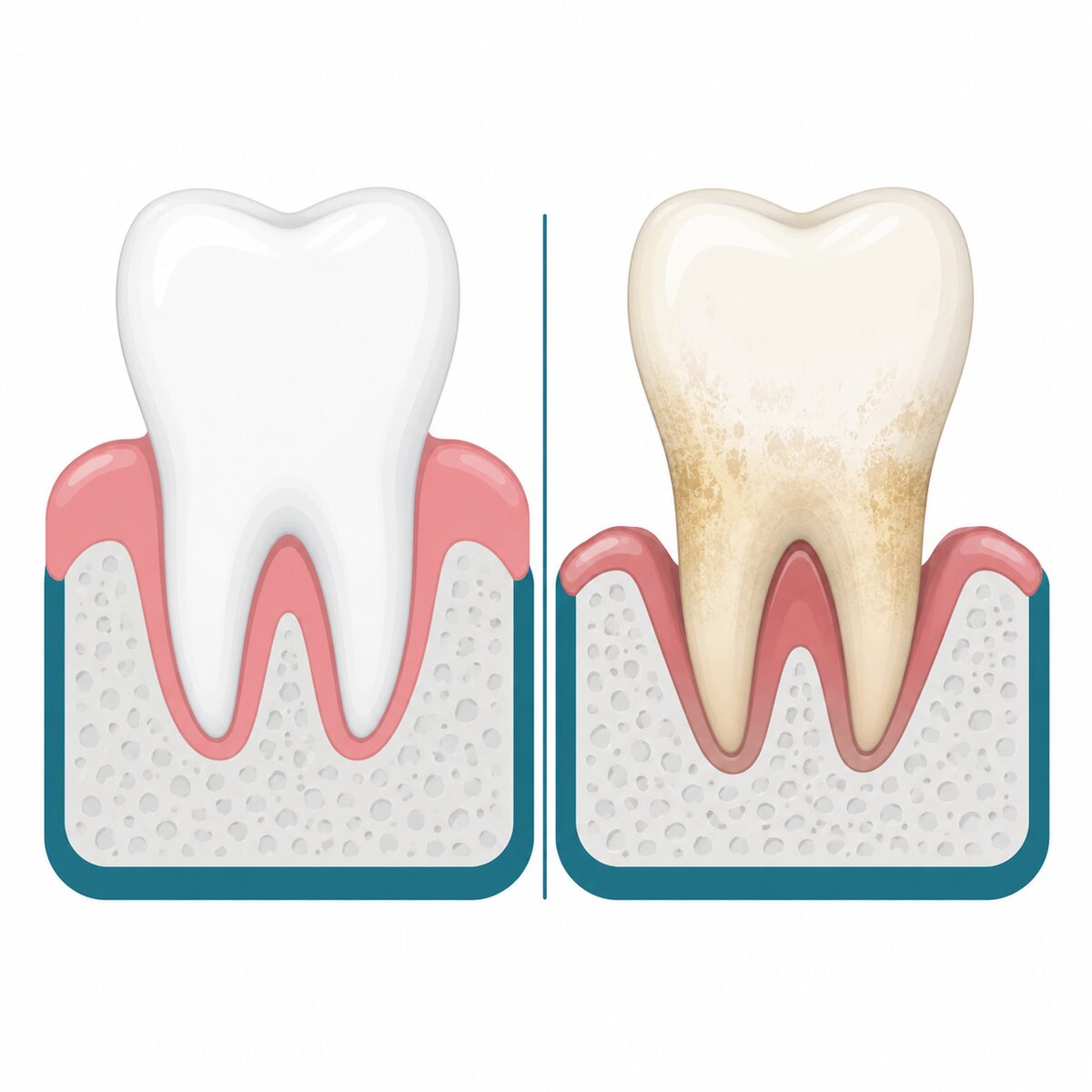
The smoking effects on teeth start with stains, but the real damage runs deeper. Tobacco fuels gum disease, slows healing after dental work, and raises your risk of oral cancer. Here's what actually happens in the mouth, laid out plainly, with the one screening worth knowing about.
The smoking effects on teeth you can see
Let's start with the obvious one. Stains. The tar and nicotine in tobacco settle into the tiny pores of your enamel, and over months they turn teeth yellow, then brown. Cigarettes do it. So do gutka, paan masala, and khaini, which are common across Lucknow and often worse for staining because they sit against the teeth for long stretches.
These stains are stubborn. A regular brushing won't shift them, and even a whitening treatment struggles if you keep smoking, because the fresh stain lands right back on. We cover what whitening can and can't do for this in our guide on professional teeth whitening. But stains are honestly the least of it. The damage you can't see is the part that matters.
What tobacco does to your gums
The smoking gum disease link is one of the strongest in dentistry, and the way it works is sneaky. Tobacco narrows the blood vessels in your gums. Less blood flow means less oxygen and fewer infection-fighting cells reaching the tissue. So when bacteria build up under the gumline, your body fights back weakly.
The frustrating part is this. One early warning sign of gum disease is bleeding gums. But smoking reduces that bleeding by choking the blood supply, so smokers often don't notice the problem until it's advanced. The gums can be quietly detaching from the bone while looking deceptively calm. By the time a tooth feels loose, a lot of bone is already gone. If you want the fuller picture of how gum disease progresses, our page on periodontal treatment walks through the stages.
And there's the breath. Tobacco dries the mouth and feeds odour-causing bacteria, which is why smoker's breath lingers. Our article on bad breath that won't go away explains why a mint won't fix it.
Why healing takes longer for smokers
This one surprises people. If you need an extraction, an implant, or gum surgery, smoking works against you the whole way. That same reduced blood flow that hurts your gums also slows wound healing. The mouth simply repairs itself slower when nicotine is in the picture.
After an extraction, smokers face a much higher chance of dry socket, where the protective blood clot fails to form or gets dislodged. It's painful, and the suction from drawing on a cigarette makes it worse. For implants, the stakes are higher still. Smoking raises the odds that an implant won't fuse properly with the bone, which is why many dentists ask you to pause smoking for a stretch before and after implant surgery. They ask because healing depends on it, not to lecture you.
The part worth taking seriously: oral cancer
I'll keep this factual, because it deserves to be heard clearly. When it comes to tobacco oral health risks, this is the one that matters most. Tobacco in every form, smoked or chewed, is the leading risk factor for oral cancer. In and around Lucknow, where chewing tobacco and gutka are widespread, oral cancer is sadly common. The good news in that hard fact is this: when it's caught early, oral cancer is far more treatable.
That's where a simple habit helps. A routine dental checkup includes a quick look at the soft tissues, the tongue, the inside of the cheeks, the floor of the mouth, for anything that shouldn't be there.
What an oral cancer screening looks for
It takes a couple of minutes and doesn't hurt. The dentist checks for white or red patches, sores that haven't healed in 2 weeks, lumps, rough spots, or a patch of skin that's grown thick. Most findings turn out to be harmless. But a sore that won't heal, a white patch that won't wipe off, or a numb area is worth flagging straight away.
One more thing tobacco does that people overlook. It dulls your sense of taste and smell over time, and it slows the flow of saliva. Saliva is your mouth's natural defence, it washes away food, neutralises acid, and carries minerals that protect enamel. A drier mouth from smoking means more plaque, more decay, and more staining, all working together. So the harm isn't just one thing. It's a chain of small effects that add up across the years. If you use tobacco in any form, it's worth getting this screening done once or twice a year, even when nothing feels wrong.
If you're cutting down or quitting
Every reduction helps, and the mouth is forgiving once tobacco stops. Within weeks of quitting, blood flow to the gums improves and healing speeds up. Within a year, gum disease risk starts dropping. The stains can be professionally cleaned and won't come straight back. You don't need to be perfect to benefit. You just need to start.
And if you smoke or chew, the single most useful thing you can do for your mouth is keep up regular checkups, so anything brewing gets caught early. You can read more about the gum side of things here, or book a screening if it's been a while. Early detection decides how easy treatment will be.
Frequently Asked Questions
Can teeth whitening remove smoking stains?
Professional whitening can lift a lot of surface staining from tobacco, and a thorough cleaning helps too. The problem is that if you keep smoking, the stains return quickly. Whitening works best once you've cut down or quit, otherwise you're treating the same surface over and over.
Why do my gums not bleed even though I smoke?
That's actually a warning, not a good sign. Smoking narrows the blood vessels in your gums, so bleeding, an early sign of gum disease, gets masked. The disease can advance quietly while your gums look calm. A checkup can measure what's really happening below the gumline.
Should I stop smoking before a tooth extraction or implant?
Yes, and most dentists will ask you to. Smoking slows healing and raises the risk of dry socket after an extraction and implant failure after surgery. Pausing for a stretch before and after the procedure gives the wound the blood flow it needs to heal properly.
How often should a tobacco user get an oral cancer screening?
Once or twice a year is sensible if you smoke or chew tobacco, even when nothing hurts. The screening is quick and painless, just a visual and physical check of the soft tissues. Catching anything suspicious early makes a huge difference to how treatable it is.