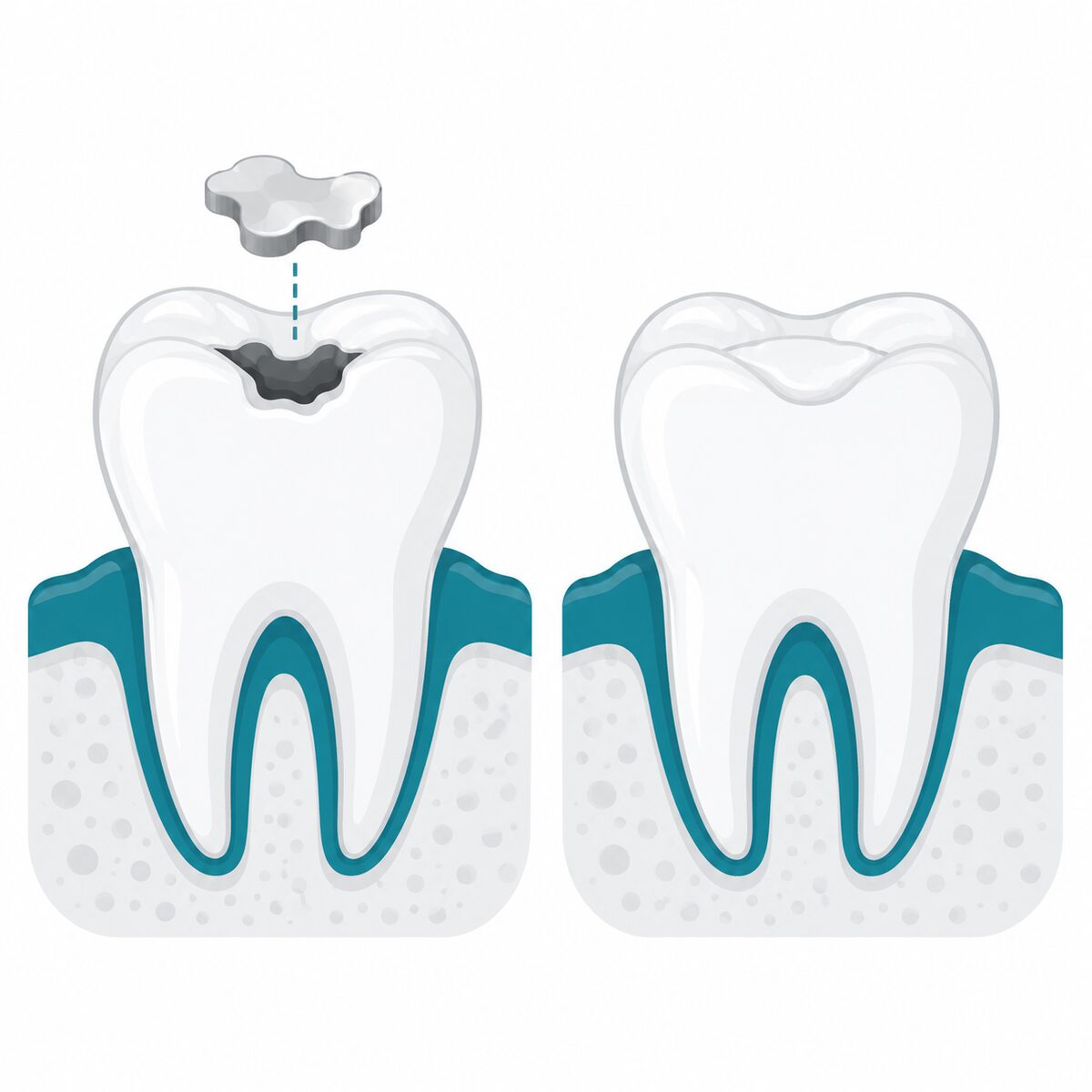
If a filling fell out, it's not an emergency, but it does need attention soon. The exposed tooth is vulnerable now, so keep the area clean, avoid chewing on that side, and get it seen within a few days. Here's why fillings come loose in the first place, what to do today, and how to stop the next one going the same way.
Why a filling fell out in the first place
A filling isn't glued in forever. It's a repair, and like any repair it can fail with time and pressure. When a filling fell out, it's usually one of a handful of reasons, and knowing which one helps you avoid a repeat.
New decay underneath. This is the most common cause. Bacteria sneak in at the edge where filling meets tooth, decay spreads beneath, and the filling loses its grip. Normal wear. Fillings don't last forever. A filling that's lasted 10 or 15 years has simply reached the end of its life. Chewing hard things. Ice, hard supari, popcorn kernels, peanut chikki, all of it can pop a filling out, especially a large one. Grinding your teeth. Clenching and grinding at night, called bruxism, hammers fillings until they crack or loosen. A big old filling in a small tooth. The more filling and the less natural tooth, the weaker the bond. Large silver fillings from years ago are common offenders.
So it's rarely random. There's usually a reason, and often it's fixable for next time.
What to do the same day
So your filling's out, or maybe it's just a loose filling wobbling and not yet gone. Either way, here's the calm, sensible plan for today, before you get the proper tooth filling repair done.
- Keep the area clean. Rinse gently with warm salt water, especially after eating, to clear out food that'll otherwise pack into the open cavity.
- Chew on the other side. The tooth is weaker now and the exposed dentin can be sensitive. Give it a break.
- Skip the hot, cold, and sweet on that side if it's sensitive, since the exposed nerve area reacts to all three.
- Don't try to glue it back. Please. Household glue near an open tooth is a bad idea. A temporary dental filling material from the chemist can plug the gap for a day or two if you're stuck, but it's a stopgap, not a fix.
- Keep the old filling if it's in one piece, though the dentist will most likely place a fresh one rather than refit the old piece.
The key thing: that exposed tooth is open to bacteria and can decay or get infected quickly. So this isn't something to leave for a month. Book it in within a few days. If there's sharp pain, swelling, or the tooth has actually broken rather than just lost its filling, treat it as urgent. Our emergency dental page tells you when to come in straight away.
Does a lost filling always hurt?
Not always, and that's the trap. Some people feel a sudden sharp edge with their tongue, or sensitivity to cold, or a dull ache. Others feel nothing at all, especially if the cavity isn't deep yet. Painless doesn't mean harmless. The open tooth is still collecting bacteria whether it hurts or not. So even a comfortable lost filling needs replacing. Don't let the absence of pain talk you out of the appointment.
And watch for a sharp edge. A tooth that's lost a filling often leaves a rough rim that can cut your tongue or cheek if you keep catching it. That irritation is another small reason not to sit on the problem for weeks. The sooner it's smoothed and filled, the less hassle you carry around in the meantime.
What happens when you come in
The dentist will clean out the cavity, remove any decay that's crept in, and place a new filling. If decay has spread deep, near the nerve, you might need a root canal rather than a simple refill, which is one more reason not to delay, the longer it's open, the more likely things escalate. If a big chunk of tooth is gone, a crown may be the sturdier choice than another large filling. You can see what a fresh filling costs in our breakdown of tooth filling cost in Lucknow, where most fillings run ₹800 to ₹2,500 depending on size and material.
Will the new filling fall out too?
Not if the cause gets addressed. If decay was the reason, the dentist clears it fully this time. If grinding was the cause, a night guard protects the new work. If it was a giant old filling in a worn tooth, a crown spreads the load better than another patch. Fixing the why is how you break the cycle.
How to make your next filling last
Fillings can last 10 years or more when they're looked after. Here's how to get there. Brush twice a day and clean between your teeth, because most filling failures start with decay at the edges. Don't use your teeth to crack ice, supari, or bottle caps. If you grind at night, get a guard, your dentist can spot the tell-tale wear. And keep your 6-month checkups, where a dentist catches a filling starting to leak before it falls out in your dinner. A small repair caught early beats a root canal caught late. For the everyday habits that protect all your fillings, our tooth filling page has the full picture.
Frequently Asked Questions
Is a lost filling a dental emergency?
Usually not an emergency unless there's severe pain, swelling, or the tooth itself has broken, in which case call straight away. A plain lost filling with no pain still needs prompt attention, ideally within a few days, because the exposed tooth can decay or get infected quickly. Don't leave it for weeks just because it doesn't hurt.
Can I glue my filling back in myself?
No, please don't use household glue near an open tooth, it's not safe. A temporary dental filling material from the chemist can plug the gap for a day or two if you can't see a dentist immediately. But that's only a stopgap, and you still need a proper replacement filling soon.
Why do my fillings keep falling out?
Recurring lost fillings usually point to an underlying cause that hasn't been fixed, most often new decay at the edges, teeth grinding, or a very large old filling in a worn-down tooth. Addressing that root cause, with thorough cleaning, a night guard, or a crown instead of another patch, is what stops the cycle.
Does losing a filling mean I'll need a root canal?
Not necessarily. If you get it replaced promptly and the decay hasn't reached the nerve, a simple new filling is usually enough. The risk of needing a root canal goes up the longer the tooth stays open and decay spreads deeper, which is exactly why getting it seen soon matters.