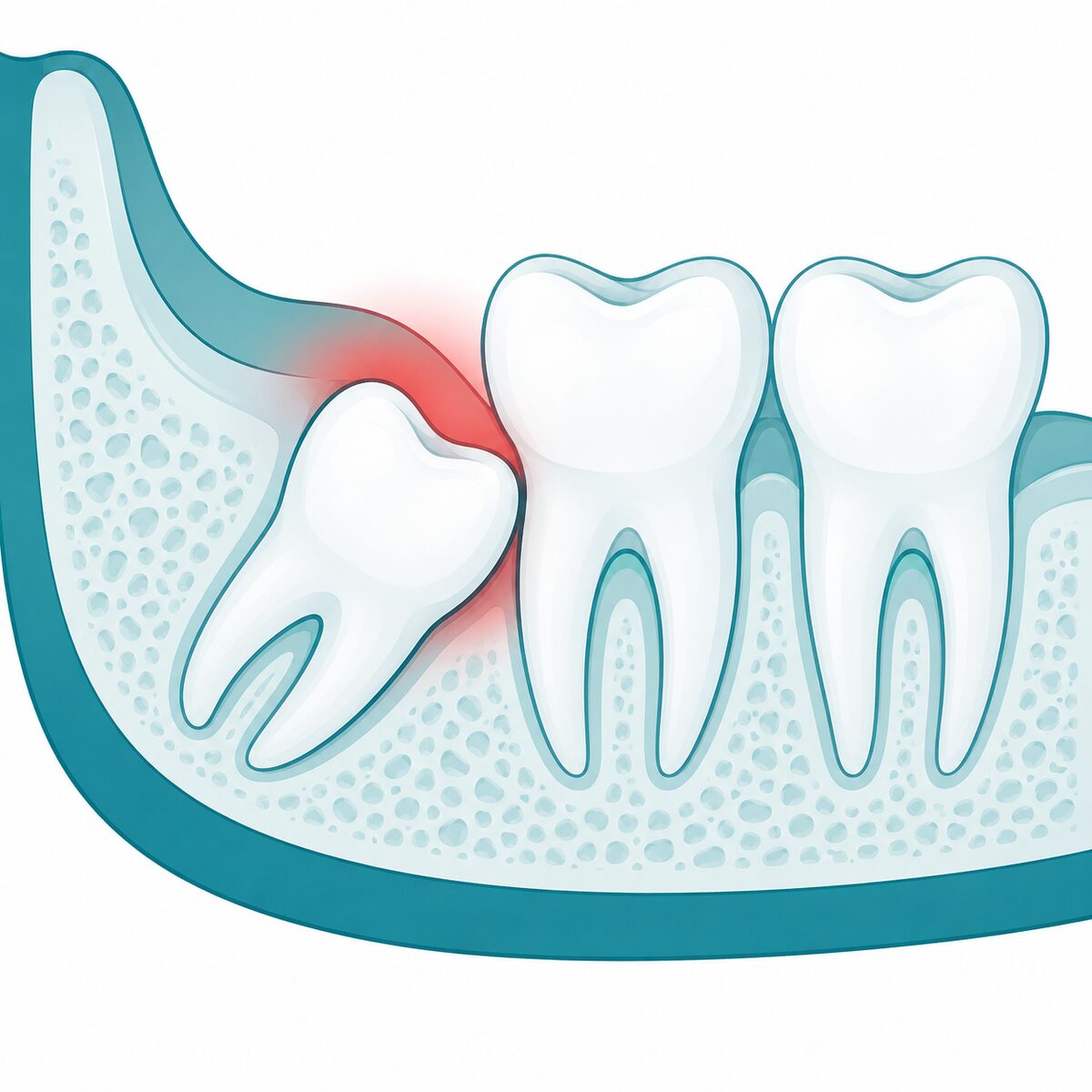
Wisdom tooth pain relief usually starts at home with a warm salt rinse, a cold compress, and gentle painkillers, and those can genuinely ease the ache tonight. What they don't do is fix the cause. Home remedies calm the symptom, not the problem behind it. If the pain keeps coming back, the tooth itself is the problem and needs a dentist's plan.
Why does a wisdom tooth hurt?
Wisdom teeth are the last molars to arrive, usually in your late teens or twenties, and by then there's often not enough room left in the jaw. That's where the trouble starts. When a wisdom tooth can't come through cleanly, you get pain, and good wisdom tooth pain relief depends on understanding which kind of trouble you have.
A few patterns are common. The tooth may be an impacted wisdom tooth, meaning it's stuck under the gum or angled against the tooth in front. It may be partly through, leaving a flap of gum that traps food and bacteria and gets infected (a condition called pericoronitis). Or it may be pushing against its neighbour, causing pressure and ache. Each of these brings a slightly different feeling, but all of them tend to flare up and settle and flare again.
Wisdom tooth pain relief you can try at home
When a wisdom tooth flares, these safe steps can ease it while you arrange to be seen.
Rinse with warm salt water several times a day, which cleans the area around the gum flap and calms inflammation. Hold a cold compress against your cheek for short spells to numb a throbbing area and reduce swelling. Keep the spot clean by brushing gently around it, even though it's tender, because trapped food makes infection worse. And take over-the-counter painkillers as directed on the packet.
A couple of don'ts matter here too. Don't place a tablet directly on the gum, since it burns the tissue. Don't poke under the gum flap with anything sharp. And don't keep chewing on that side, which only aggravates the area.
Why home relief is only a stopgap
Salt rinses and painkillers manage the symptoms, and that's useful for getting you through until you can be seen. But they do nothing about the tooth being stuck, angled wrong, or trapping bacteria under a gum flap. The cause is still there. So the pain comes back, often a little worse each time, and the infection can spread if it's left.
That's why repeated flare-ups are a signal, not just an inconvenience. A tooth that keeps acting up is telling you it needs a proper assessment.
When does a wisdom tooth need to come out?
Not every wisdom tooth needs removing. If it's come through straight, has room, and you can clean it properly, it can stay. Removal is usually recommended when the tooth is impacted, when it keeps getting infected, when it's damaging or decaying the tooth next to it, when there's a cyst forming, or when the pain keeps returning despite cleaning.
The decision comes down to an X-ray showing the position of the tooth and its roots. A dentist can then tell you whether it's a simple extraction or a surgical one, and what to expect. For anyone weighing up wisdom tooth removal, Lucknow patients tell us the X-ray and a straight conversation are where every good decision starts. Our oral surgery care covers wisdom tooth removal Lucknow patients trust, including the trickier impacted cases, done with proper numbing so the procedure itself is comfortable.
People naturally ask about the expense before deciding. We've laid the figures out plainly in our guide to wisdom tooth removal cost in Lucknow, so there are no surprises when you come in.
What recovery from removal actually looks like
If the tooth does come out, the days after are easier than most people expect. There's usually some swelling and soreness for the first two or three days, which a cold compress and the painkillers your dentist gives you handle well. You stick to soft, cool food, avoid rinsing hard on the first day, and keep the area clean.
Most people are back to normal within a week. The trickier impacted cases take a little longer to settle. Follow the aftercare you're given and the healing is usually smooth, with the bonus that the recurring flare-ups are gone for good.
When to call a dentist right away
Some wisdom tooth pain can wait for a normal appointment. Some can't. Call promptly, or seek urgent care, if you have swelling of the face or jaw, a fever along with the pain, difficulty opening your mouth or swallowing, or pain so severe that painkillers barely help. These point to a spreading infection that needs treating quickly.
For anything that's clearly urgent, like fast swelling or severe pain you can't control, don't wait it out at home. Reach our emergency dental care and call straight away.
Putting it together
Wisdom tooth pain relief at home (warm salt rinses, a cold compress, gentle painkillers, keeping the area clean) can ease a flare-up and buy you time. But it doesn't fix a tooth that's stuck, angled wrong, or trapping infection. If the pain keeps coming back, get the tooth assessed so you can decide whether it stays or comes out. And if there's swelling, fever, or trouble opening your mouth, call right away rather than waiting.
Frequently Asked Questions
How can I relieve wisdom tooth pain tonight?
Rinse with warm salt water several times, hold a cold compress to your cheek in short spells, and take an over-the-counter painkiller as directed on the packet. Keep the area gently clean even though it's sore. These ease the pain for now, but if it keeps returning, the tooth needs a dentist's assessment.
Do all wisdom teeth need to be removed?
No. A wisdom tooth that has come through straight, has enough room, and can be kept clean is usually fine to leave. Removal is recommended when it's impacted, keeps getting infected, damages the neighbouring tooth, or causes recurring pain. An X-ray shows the position and helps the dentist decide what's best for you.
Is wisdom tooth removal painful?
The removal itself isn't painful because the area is fully numbed first, so you feel pressure but not pain. Afterwards there's usually some soreness and swelling for a few days, which is managed with painkillers and simple aftercare. Impacted teeth take a bit longer to heal than straightforward ones, but most people recover smoothly.
What is that flap of gum over my wisdom tooth?
When a wisdom tooth only partly comes through, a flap of gum often sits over part of it. Food and bacteria get trapped underneath and the area becomes inflamed and painful, a condition called pericoronitis. Keeping it clean and rinsing helps short term, but recurring infection usually means the tooth should be assessed for removal.