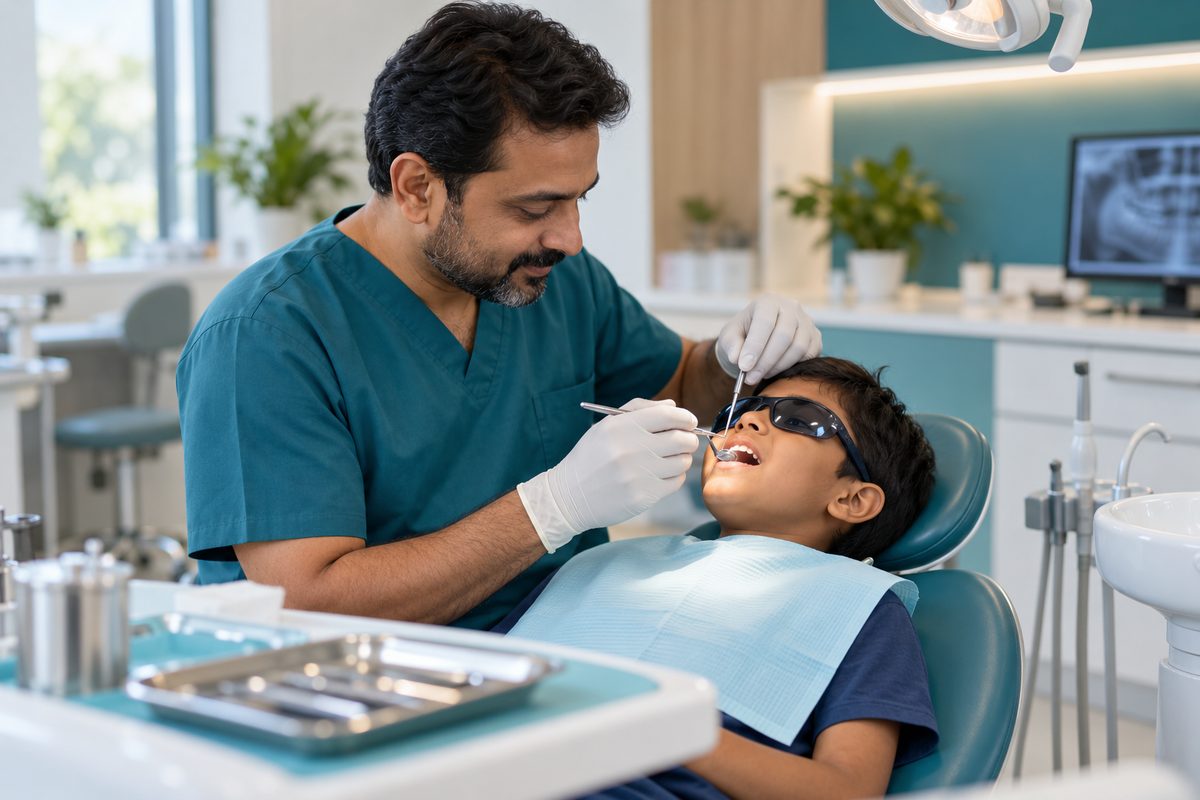
Dental sealants for kids are thin coatings that protect deep back-tooth grooves where brushing may miss plaque and food. Fluoride varnish strengthens enamel, and together these treatments can reduce cavity risk without replacing good brushing, diet and regular checks.
Why do back teeth get cavities so easily?
If you look closely at a child's back teeth, the chewing surfaces are not flat. They have pits and narrow grooves that help grind food. Some of those grooves are so deep that even a good toothbrush bristle cannot reach the bottom.
Food and plaque can sit there for hours. This is one reason cavities in children often begin on the chewing surfaces of molars, especially soon after permanent molars come through.
That does not mean every grooved tooth will decay. Good brushing, sensible eating habits and regular dental checks still matter. But when molars have deep grooves, we may suggest an extra layer of protection before a filling is ever needed.
If your child has already had decay in a baby tooth, our guide to cavities in milk teeth explains why those teeth are still worth treating and protecting.
What are dental sealants for kids?
Dental sealants for kids are thin coatings placed over the chewing grooves of back teeth. You may also hear them called pit and fissure sealants.
We clean the tooth, prepare the surface so the material can grip properly, flow the sealant into the grooves, and set it with a curing light. Once set, it forms a barrier over areas where plaque and food would otherwise collect.
For a routine sealant on a healthy tooth, there is no drilling and no injection. The procedure usually takes only a few minutes per tooth.
The main challenge is keeping the tooth dry while the material is placed. Younger children sometimes find that awkward, but it is brief. If your child is worried about the dental chair, tell us beforehand so we can explain each step calmly.
What is the right sealant age?
There is no single sealant age for every child. We time the treatment around when the teeth erupt and how vulnerable they look.
The first permanent molars usually appear at around six years of age. They come in behind the last baby teeth, so parents sometimes mistake them for another set of milk teeth. These molars are often considered for sealants because their grooves can be deep and the child is still learning to brush well at the back.
The second permanent molars usually erupt at around twelve years of age. These may also benefit from sealants.
Sometimes we seal deep grooves in baby molars too, especially if a child is at higher risk of decay and the teeth are expected to remain for several more years. We decide tooth by tooth rather than sealing every molar automatically.
Which children benefit most from sealants?
We are more likely to recommend sealants when a child has one or more of these factors:
- Deep pits and grooves in molars, previous cavities, braces or other appliances that make cleaning harder, special needs that make brushing difficult, or a pattern of frequent sugary snacks and drinks.
A child who has never had a cavity can still benefit if the tooth anatomy makes plaque control difficult. A shallow, easy-to-clean groove may not need sealing.
If you want to improve the food side as well, our guide to food for strong teeth explains everyday habits that can reduce repeated sugar exposure.
What is fluoride varnish for children?
Fluoride varnish for children is another preventive treatment, but it works differently from a sealant.
Instead of covering the grooves, fluoride varnish is painted directly onto the teeth in a thin layer. The application takes only seconds. Fluoride helps strengthen enamel and makes it more resistant to acid attacks from plaque bacteria.
It can also help stop very early areas of enamel decay, often seen as chalky white spots, if the surface has not broken down into a cavity. Not every white mark is early decay, so it still needs to be checked.
For children at higher risk of cavities, fluoride varnish is commonly repeated about every six months. Some children may need a different interval based on their dental history and current risk.
After varnish is applied, follow the instructions your dentist gives you about eating and brushing because recommendations can vary with the product used.
Sealants and fluoride varnish are not the same thing
| Treatment | What it does | Usual age | How long it lasts |
|---|---|---|---|
| Dental sealant | Covers deep pits and grooves so plaque and food are less likely to collect there | Commonly around age 6 for first permanent molars and around age 12 for second molars, sometimes earlier for selected baby molars | Often several years, but it can wear or chip and may need repair |
| Fluoride varnish | Strengthens enamel and can help arrest very early enamel decay before a hole forms | Can be used from early childhood when indicated | The fluoride effect is temporary, so it is repeated at intervals based on cavity risk |
Many children benefit from both because they protect teeth in different ways. Sealants protect the physical grooves. Fluoride helps the enamel cope better with acid attacks.
Do sealants hurt?
Parents often ask, "Do sealants hurt?" For a routine sealant, we do not need to remove healthy tooth structure, so drilling and an anaesthetic injection are normally not required.
Your child may notice the tooth being cleaned, cotton rolls or suction in the mouth, and the taste of the dental materials. They also need to keep the mouth open while the tooth is kept dry.
The bite may feel slightly different immediately after placement. We check the sealant and adjust it if needed.
How long do dental sealants last?
Sealants often stay in place for several years, but they are not permanent. Chewing forces can wear them down, and a small part can chip away.
That is why we look at them during routine dental visits. If a sealant is partly worn but the tooth underneath is sound, we can often clean the area and top it up.
A sealant only protects the surface it covers. Cavities can still develop between teeth or along areas that are not sealed.
If you're unsure about the right check-up interval for your child, see our guide on how often to visit the dentist.
What still needs to be done at home?
Sealants are useful, but they do not replace daily care.
Your child still needs to brush twice a day with fluoride toothpaste in the right amount for their age, clean between teeth where possible, and reduce how often sugary foods and drinks are taken. Frequency matters. Repeated small snacks throughout the day keep exposing teeth to acid.
Water between meals is a better default than juice, sweetened milk or soft drinks. Sticky sweets and biscuits are best kept to meal times rather than spread across the day.
Parents should continue helping or supervising brushing until the child can clean all tooth surfaces properly. Back molars are easy to miss.
Can sealants prevent every cavity?
No. Sealants lower the risk in protected grooves, but they cannot guarantee that a child will never develop decay.
A cavity can still start between two teeth, near the gum line, or beside a sealant if plaque remains there. A sealant can also fail if the tooth could not be kept dry during placement.
The best way to prevent cavities in children is to combine sensible diet habits, fluoride toothpaste, cleaning between teeth when appropriate, dental checks and preventive treatments such as sealants or fluoride varnish when needed.
Our children's dentistry page explains the other preventive and restorative care we provide for younger patients.
What should you ask at your child's next dental visit?
You do not need to wait until your child has toothache. Ask the dentist to show you the newly erupted molars and tell you whether the grooves are shallow and easy to clean or deep enough to consider sealing.
It is also useful to ask whether your child is showing any early white areas, plaque build-up, decay between teeth or signs that frequent snacking is affecting enamel.
If cost is part of your planning, see our guide to kids' treatment costs, because the treatment needed depends on the number of teeth and the child's examination.
If you would like us to check your child's molars, fluoride needs and cavity risk, you can book a preventive visit at Haihyvanshi Dental Clinic & Implant Centre on IIM Road, Lucknow.
Frequently Asked Questions
Does my child need sealants if they brush well?
Possibly. Good brushing is the foundation, but some molar grooves are too narrow for toothbrush bristles to clean fully. If your child's back teeth have deep pits and grooves, a dentist may recommend sealing them even when brushing is good. The decision should be based on the tooth shape, cavity history and current risk.
Can sealants be put on baby teeth?
Yes, in selected cases. Baby molars with very deep grooves may be sealed if a child has a higher cavity risk and those teeth are expected to remain for several more years. Not every baby molar needs a sealant, so the dentist will usually assess the grooves, hygiene and previous decay first.
How often does a child need fluoride varnish?
For a child with a higher risk of cavities, fluoride varnish is commonly repeated about every six months. The interval can vary because risk is not the same for every child. A dentist may consider previous cavities, early white spots, brushing quality, diet and other fluoride exposure before deciding how often to apply it.
Can a sealant come off without us noticing?
Yes. Sealants can slowly wear, chip or partly detach, and a child may not feel any change. That is why we check them during routine dental visits. If part of a sealant has been lost and the tooth is still healthy, the area can often be cleaned and the protective material topped up.