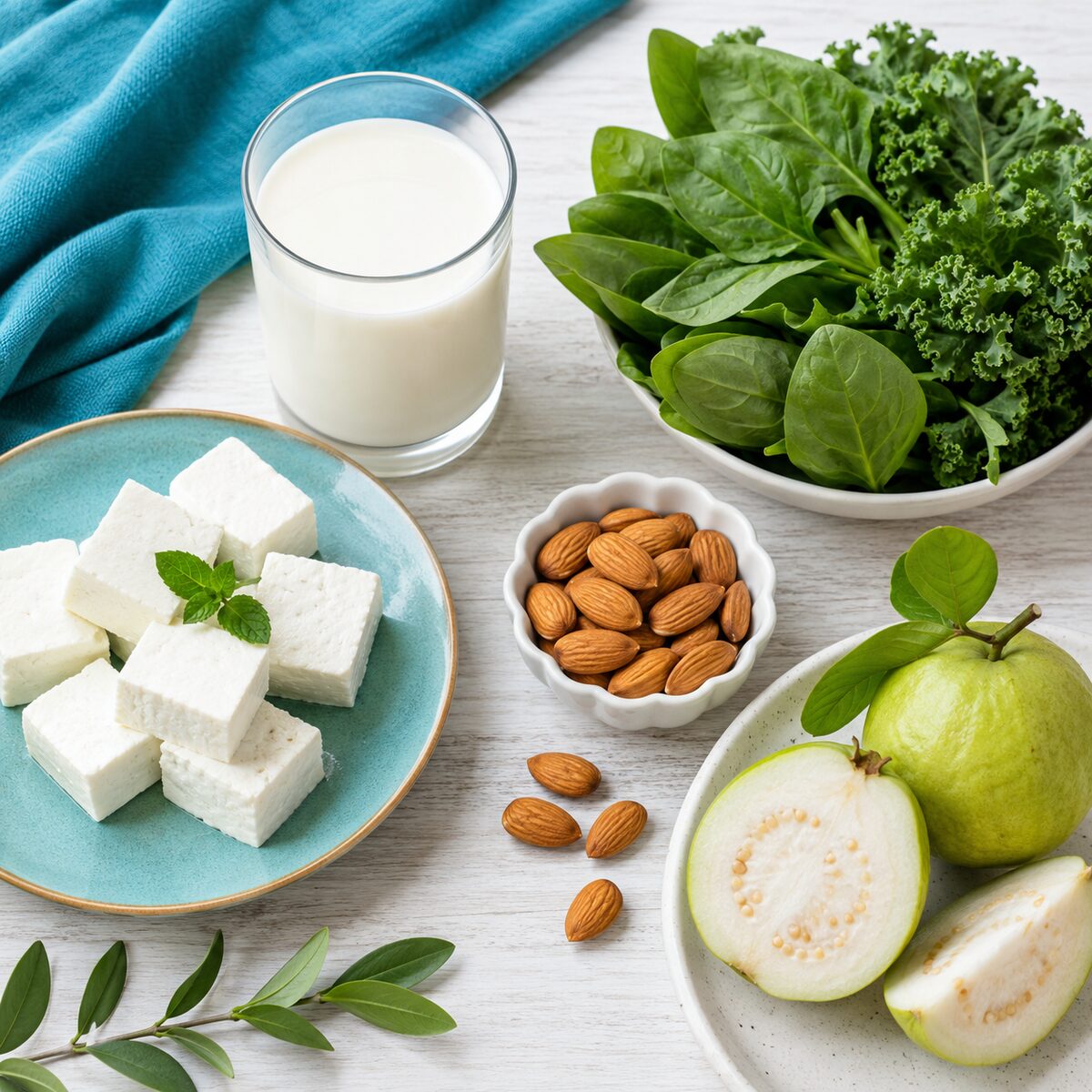
A good diet for strong teeth isn't complicated, and it isn't about giving up everything you like. Your teeth are built from minerals, and what you eat either keeps feeding them or slowly breaks them down. Here's what actually helps and what wears them down.
The diet for strong teeth starts with the right minerals
Teeth aren't just hard, they're alive and constantly being maintained by minerals from your food and saliva. So the foods for healthy teeth are the ones that supply those minerals and don't feed the bacteria that cause decay. Get this balance right and your enamel stays tough. Get it wrong and even perfect brushing struggles to keep up.
The two enemies are sugar and acid. Sugar feeds bacteria, which produce acid, which dissolves enamel. Acidic foods do the dissolving directly. Most of what follows comes back to managing those two.
What to eat for stronger teeth
Calcium matters most, and you don't need supplements to get plenty of it. Milk, curd, paneer, and cheese are loaded with it. For vegetarians, that's an easy daily source, and a glass of milk or a bowl of curd does real work. Calcium for teeth is the building block your enamel and jawbone both need.
But calcium needs help to actually reach your teeth. That's where these come in:
- Leafy greens like palak and methi (calcium plus folate)
- Almonds, til (sesame), and ragi, which are surprisingly rich in calcium
- Cheese, which also helps balance acid in the mouth after meals
- Crunchy fruits and vegetables like apple, carrot, and guava, which gently clean teeth and boost saliva
- Eggs and fish for those who eat them, for vitamin D and phosphorus
Saliva matters more than people realise. It washes away food and neutralises acid. Crunchy, water-rich foods get it flowing, which is why an apple is a far better snack than a biscuit. And plain water, especially after meals, rinses the mouth and helps a lot. Drink it through the day.
When you eat sugar matters as much as how much
Here's something most people don't think about. It's not just how much sugar you eat, it's how often. Sipping sweet chai five times across a workday keeps your mouth under acid attack almost constantly. The same sugar eaten in one go does less harm. So if you're going to have something sweet, have it with a meal and be done, rather than grazing on it all day.
What to avoid, or at least cut down
You know the obvious ones: toffees, chocolates, biscuits, mithai. The sticky ones are worst because they cling to teeth long after you've eaten. Sticky sweets like chikki or caramel sit in the grooves of your molars and feed bacteria for hours.
Then there are the ones people don't expect:
- Soft drinks and packaged juices, which are both sugary and acidic, a double hit
- Frequent chai or coffee with sugar, especially sipped slowly
- Sour, tangy snacks and pickles, which are acidic
- Refined snacks like chips and namkeen, which break down into sugars and lodge in teeth
And tobacco in any form, gutka, paan masala, cigarettes, is in a category of its own. It stains teeth, fuels gum disease, and raises oral cancer risk. There's no safe amount.
Don't forget vitamin D and the underrated minerals
Calcium gets all the attention, but it can't do its job alone. Vitamin D is what helps your body actually absorb that calcium, and a lot of people, even in sunny places, run low on it. A little morning sun, plus eggs and fortified foods, helps. Vitamin C matters too, for healthy gums, so citrus, amla, guava, and capsicum earn their place (just rinse after the acidic ones). And phosphorus, found in milk, nuts, and whole grains, works alongside calcium to rebuild enamel. You don't need to track any of this. A varied home-cooked plate covers it naturally, which is one more reason a balanced thali protects your teeth every day.
Simple habits that protect your teeth
You don't have to be perfect. A few easy moves cover most of it. Rinse with plain water after sweet or acidic food. Eat sweets with meals, not as standalone snacks. End a meal with something neutral like cheese or a few nuts rather than something sugary. And don't brush immediately after acidic food, wait about 30 minutes, since enamel is briefly softened.
This applies just as much to children, whose new teeth are still hardening. Building good food habits early is one of the kindest things you can do for them. The guide on caring for your child's first teeth covers the early years in detail. If you want a fuller picture of how daily habits shape oral health, the dental education page is worth a look.
What to remember
Eat your calcium-rich foods, crunch on fresh fruit and veg, drink water through the day, and keep sugar to meal times rather than all-day grazing. Diet won't replace brushing or checkups, but it does about half the work. If you're already seeing cavities or sensitivity despite eating well, it's worth getting checked through general dentistry, because something else may be going on.
Frequently Asked Questions
Which foods make teeth stronger?
Calcium-rich foods do the heavy lifting: milk, curd, paneer, cheese, almonds, til, and ragi. Leafy greens like palak add minerals too, and crunchy fruits and vegetables such as apple and guava boost saliva, which protects teeth naturally. A glass of milk or bowl of curd daily is an easy start.
Is it the amount of sugar or how often I eat it that matters?
How often matters more than people think. Sipping sweet chai through the day keeps your mouth under constant acid attack, which is worse than the same sugar eaten in one sitting. If you want something sweet, have it with a meal and finish it, rather than grazing all day.
Are fruit juices good for teeth?
Whole fruit is great, but packaged juices and soft drinks are a problem. They're both sugary and acidic, which is a double hit on enamel. Eating a real fruit is far better, since you get the fibre and saliva flow without the concentrated sugar and acid.
Can a good diet replace brushing?
No. Diet does about half the work by feeding your teeth minerals and cutting down acid attacks, but it can't remove plaque the way brushing and flossing do. Think of them as a team. Eat well, brush twice daily, and keep your regular checkups.