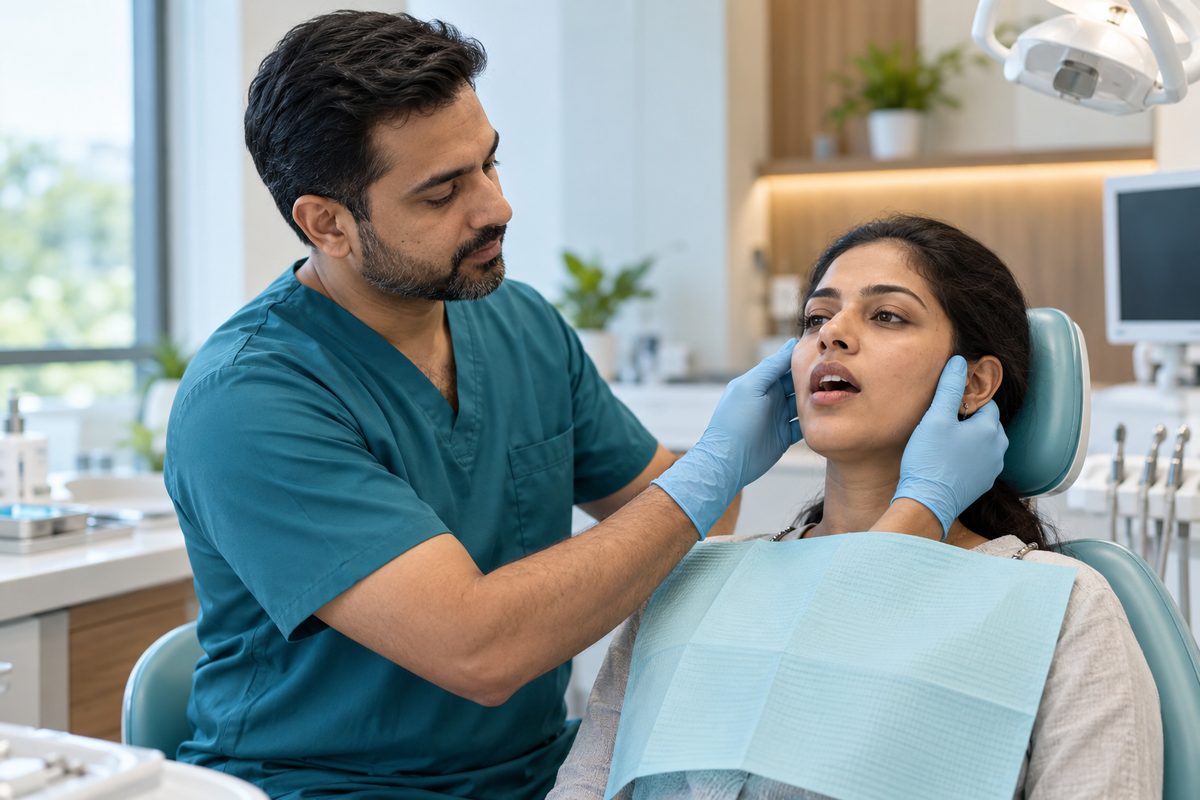
Jaw clicking on its own, with no pain or restriction, is common and often doesn't need treatment. If the click comes with pain, locking, reduced opening or a bite that suddenly feels different, the joint should be assessed. Most TMJ problems improve with simple measures and time.
Why does my jaw click when I open my mouth?
The temporomandibular joint, usually shortened to TMJ, connects your lower jaw to the skull. You have one on each side, just in front of the ear. Inside the joint is a small disc that helps the jaw move smoothly as you open, close, chew and yawn.
Sometimes that disc moves slightly out of its usual position and then slips back as the jaw opens. That can produce a click or pop. A clicking jaw joint by itself is not always a sign of disease.
If you have jaw clicking but no pain, your mouth opens normally, you can eat comfortably, and the jaw does not lock, treatment may not be needed. The situation changes when the click comes with pain, stiffness, restricted movement, locking or a sudden change in your bite.
Which symptoms suggest a TMJ problem?
TMD is the term used for problems affecting the jaw joint, the chewing muscles, or both.
Pay more attention if you notice pain just in front of the ear, aching in the cheek muscles, headaches around the temples, jaw pain when chewing, or a jaw that feels tired after a meal. Some people find that the jaw catches briefly before opening.
A jaw that locks open or closed needs prompt assessment. So does a bite that suddenly feels different, especially if the change appeared with pain or after an injury.
A rough grating sound is also different from a simple click. It can occur when the joint surfaces are irritated or affected by arthritis, although the sound alone cannot tell us exactly what is happening.
| Symptom | What it may mean | What to do |
|---|---|---|
| Click with no pain and normal opening | Disc movement that may not need treatment | Monitor it and avoid repeatedly making it click |
| Pain in front of the ear or cheek | Joint or chewing muscle irritation | Reduce strain and arrange a dental assessment if it persists |
| Jaw pain when chewing | Muscle overload, clenching, grinding or joint irritation | Choose softer food temporarily and get checked if it continues |
| Jaw locking or very limited opening | Joint disc problem or significant inflammation | Seek prompt assessment |
| Bite suddenly feels different | Joint position, muscle spasm, dental contact or injury may be involved | Arrange an examination rather than trying to adjust it yourself |
| Grating instead of clicking | Possible joint surface wear or arthritis | Have the joint assessed, especially if there is pain or stiffness |
What causes jaw clicking and TMJ pain?
There is rarely one single cause in every person. We usually look at the joint, the chewing muscles, the way the teeth meet and the habits that may be overloading the area.
Clenching and grinding are common contributors. Some people grind during sleep, while others keep the teeth pressed together during concentration or stressful periods. Our guide to teeth grinding and jaw pain explains the signs in more detail.
Stress can increase muscle tension around the jaw even when you are not aware that you are clenching. Poor sleep may make this worse.
Chewing gum for long periods, eating very hard food, biting nails, or repeatedly testing the click can also irritate the joint and muscles.
Jaw symptoms can appear after a knock to the face, a very wide yawn, or a long dental appointment where the mouth had to stay open. Arthritis can affect the TMJ too.
Another common cause is disc displacement inside the joint. The small disc can move forward and then slip back into place during opening, producing the familiar click. If the disc stops slipping back, the jaw may become restricted or lock.
Dental problems can sometimes feel like jaw pain. A cracked tooth, decay or an inflamed nerve may hurt during chewing and be mistaken for TMD. If the pain is focused on one tooth, see our guides on pain when biting and tooth pain at night.
The way your teeth meet can matter in selected cases, although bite shape alone does not explain every TMJ symptom. You can read more about common bite problems.
What can I do at home for a clicking or sore jaw?
For mild symptoms, reducing the load on the joint for a short period often helps. You do not need to stop using your jaw completely. The aim is to let irritated muscles and joint tissues settle.
- Choose softer foods for a few days, cut firm foods into smaller pieces, avoid gum and very hard or chewy items, avoid opening wide when yawning, use a warm compress over the sore muscles, practise gentle jaw movements without forcing the mouth wide, and pay attention to stress, clenching and sleep.
Try to keep your teeth slightly apart when you are resting. Your lips can be together, but your upper and lower teeth do not need to touch all day.
Do not keep opening your mouth to see if the joint still clicks. Repeating the movement can irritate the area.
If an exercise increases pain, causes catching, or makes the jaw feel less stable, stop it and get advice before continuing.
What does TMJ treatment involve?
TMJ treatment depends on what is causing the symptoms. Most people do not need injections or surgery. Conservative care is usually the starting point.
At an appointment, we check how far the jaw opens, whether it moves straight or deviates, where the tenderness is, whether the muscles are sore, and how the teeth meet. We also look for signs of grinding, worn teeth, cracked teeth or a filling that may be too high.
If a recent filling is contacting too heavily and clearly contributing to discomfort, adjusting that filling may help. This is different from grinding down healthy teeth to change the bite, which is not a routine first treatment for TMD.
A night guard or splint may be advised if clenching or grinding is likely to be overloading the jaw. It can protect the teeth and, in suitable cases, reduce strain on the jaw muscles. It does not cure every type of TMJ problem, so it should be chosen after an examination.
If muscle tightness or restricted movement is a major part of the problem, physiotherapy can be useful. A physiotherapist with experience in jaw problems may work on controlled movement, posture and muscle relaxation.
If we suspect arthritis, significant disc problems, repeated locking, or another condition that needs specialist input, further assessment may be recommended. Imaging is not required for every click. It is usually considered when the examination and symptoms suggest it would change management.
Injections and surgery are reserved for specific cases, such as persistent joint disease or mechanical problems that have not improved with simpler care. They are not the usual answer for a painless click.
You can also see our general dentistry page for the types of dental problems we assess and treat.
When should I see a dentist promptly?
Arrange an assessment promptly if your jaw locks, you cannot open or close fully, the pain is severe, or the pain is getting worse instead of settling.
You should also be checked if the bite suddenly feels different, there is swelling, symptoms began after an injury, or jaw pain is making it difficult to eat normally.
If you have a click that has been present for a long time but there is no pain, no locking and no restriction, it is usually less urgent. Mention it at your next dental visit so the joint can be checked.
Will jaw clicking go away?
Sometimes it does, and sometimes the sound remains even after discomfort settles. The main goal is not always to make the joint completely silent. It is to restore comfortable function, reduce pain and prevent repeated overloading.
Most people with uncomplicated TMD improve with simple measures, time and treatment directed at the cause.
If your jaw is painful, catching or locking, you can book a jaw assessment with Haihyvanshi Dental Clinic & Implant Centre on IIM Road, Lucknow.
Frequently Asked Questions
Is a clicking jaw joint serious if it doesn't hurt?
A painless click with normal opening and no locking is often not serious and may not need treatment. Try not to keep making it click on purpose. Mention it at your regular dental visit, and arrange an earlier assessment if pain, stiffness, limited opening or locking develops.
Can a night guard stop jaw clicking?
A night guard may help if clenching or grinding is overloading your jaw muscles or teeth, but it doesn't fix every cause of jaw clicking. The right splint depends on the examination. If the joint is locking or movement is restricted, you may need a different approach rather than a guard alone.
What should I eat when my jaw hurts while chewing?
For a few days, choose softer foods and cut firm food into small pieces so the jaw does less work. Avoid chewing gum, very hard snacks and foods that need prolonged chewing. As symptoms settle, return gradually to your usual diet. Persistent jaw pain when chewing should be assessed.
Should I go to a dentist or doctor for jaw locking?
If your jaw locks open or closed, or you cannot open or close it fully, arrange prompt assessment. A dentist can check the joint, muscles, teeth and bite, then refer you if specialist care or imaging is needed. Severe swelling, major injury or other concerning symptoms may also need medical assessment.