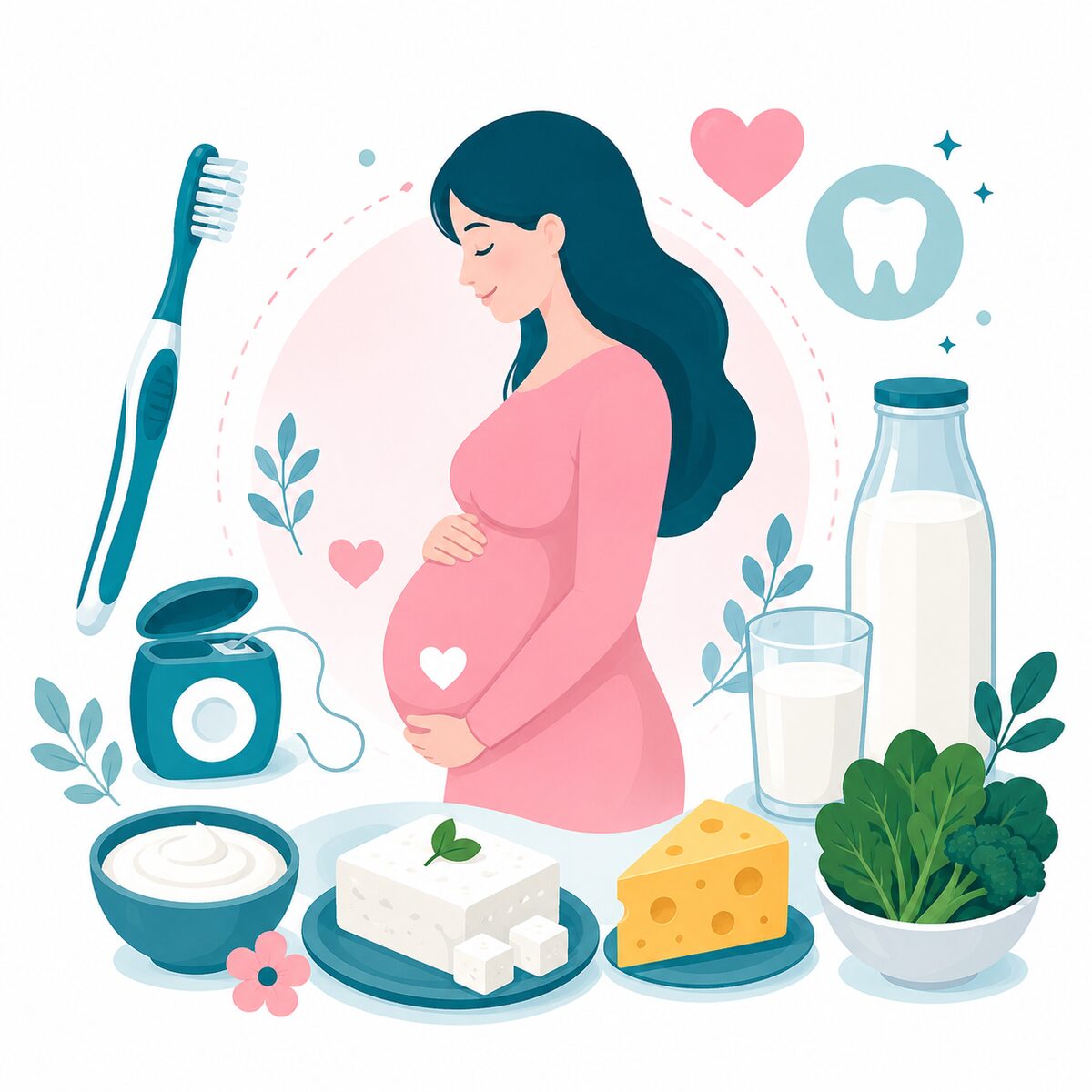
Oral care during pregnancy matters more than most people expect, because the hormonal changes of these nine months hit your gums hard. The good news is that staying on top of it is simple and safe. Here's a clear, trimester-by-trimester guide to what to do and when.
Why oral care during pregnancy needs extra attention
Pregnancy changes your body in ways that reach all the way to your mouth. Rising hormones make your gums react more strongly to plaque, so even the same brushing routine can leave them swollen and bleeding. This is so common it has a name, pregnancy gingivitis, and it affects a large share of expecting mothers. Left alone, pregnancy gum problems can worsen, and there's reasonable evidence linking serious gum disease to early or low-weight births. So this isn't vanity. It's part of looking after the baby too.
The reassuring part: a dentist during pregnancy is not only safe, it's recommended. Tell your dentist you're expecting and how many weeks along you are, and your care gets tailored around it. Let's go trimester by trimester.
First trimester (weeks 1 to 12)
This is the settling-in stage, and often the one with morning sickness. Two things matter here. First, if you're vomiting, the stomach acid coats your teeth and softens enamel. Don't brush straight after, that scrubs the softened enamel away. Instead rinse with plain water (a pinch of baking soda in it helps neutralise the acid), then brush about 30 minutes later.
Second, this is generally not the time for elective or major dental work. The first trimester is when the baby's organs are forming, so anything that can wait, should wait. What you should still do is keep up gentle, thorough brushing and flossing, and book a checkup so your dentist knows your baseline. Emergencies, like a bad infection or severe pain, are always treated whenever they happen, because an untreated infection is a bigger risk than the treatment.
Second trimester (weeks 13 to 27)
This is the sweet spot. You're usually past the worst nausea, your energy is back, and the baby is well settled. If you need a cleaning, a filling, or to deal with that bleeding gum issue, now is the ideal window. Most routine and necessary dental treatment is comfortably done in these months.
If your gums have been bleeding, get a professional cleaning done. Tartar buildup is what keeps the inflammation going, and a scaling clears it. Bleeding gums during pregnancy are common but they're not something to just accept, and the piece on bleeding gums causes explains what's driving it. Some women also develop a small lump on the gum called a pregnancy tumour (harmless despite the scary name, and it usually shrinks after delivery). Get it looked at so you know what it is.
What's safe in the second trimester?
Cleanings, fillings, treating infections, and necessary X-rays with proper shielding are all considered safe. Dental X-rays use a very small dose and your abdomen is covered with a lead apron. Local anaesthesia used for fillings is safe in the amounts dentists use. The clinic's general dentistry covers the routine care that's best handled in this window.
Third trimester (weeks 28 to birth)
Early in the third trimester is still fine for treatment, but as you get bigger, lying back in the dental chair for long stretches becomes uncomfortable and can even make you feel lightheaded (the weight presses on a major blood vessel). So shorter appointments, and lying slightly on your side with a cushion, help.
By the last few weeks, most dentists prefer to postpone anything non-urgent until after delivery. You've got enough going on. Keep up your home care, manage any issues that arise, and plan bigger elective work, like a smile makeover or whitening, for after the baby arrives and things settle.
What to postpone until after pregnancy
Some things are genuinely better to wait on. These can almost always be postponed:
- Teeth whitening and cosmetic work (purely elective, no reason to rush)
- Non-urgent major procedures that can comfortably wait a few months
- Anything elective in the first trimester and the final weeks of the third
And what should never wait: severe pain, swelling, an abscess, or a knocked-out or broken tooth. Infections need treating promptly because they pose a real risk to both you and the baby. If something like that happens, call the clinic straight away rather than toughing it out.
Your daily routine through all nine months
Brush twice a day with a soft brush, floss once, and don't skip it even when you're exhausted. If sweet cravings have you snacking more often, rinse with water in between. Keep your calcium up through milk, curd, and paneer, which helps you and the baby both. And do book at least one dental checkup during the pregnancy, ideally in the second trimester.
A realistic plan
Brush and floss gently but well, get a checkup in the second trimester, treat problems promptly, and save elective work for after delivery. Always tell your dentist you're pregnant and how far along. To plan a safe checkup at the right time, reach out through the contact page and the team will fit you in around your stage.
Frequently Asked Questions
Is it safe to visit the dentist during pregnancy?
Yes, and it's recommended. Routine checkups and cleanings are safe throughout, and the second trimester is the best window for any necessary treatment. Always tell your dentist you're pregnant and how many weeks along you are, so your care is tailored. Skipping the dentist does more harm than going.
Why are my gums bleeding more during pregnancy?
Pregnancy hormones make your gums react more strongly to plaque, so they swell and bleed more easily. It's so common it has a name, pregnancy gingivitis. It's manageable with good brushing, flossing, and a professional cleaning, ideally in the second trimester. Don't just put up with it.
Can I get an X-ray or filling while pregnant?
Yes, when needed. Dental X-rays use a very small dose and your abdomen is shielded with a lead apron. Fillings with local anaesthesia are safe in the amounts dentists use. The second trimester is the preferred time for this kind of necessary work.
What dental treatment should I postpone during pregnancy?
Elective and cosmetic work like teeth whitening can wait until after delivery, and non-urgent procedures are best avoided in the first trimester and final weeks. But never postpone treatment for severe pain, swelling, or infection, since those are a real risk to you and the baby. Call right away for those.