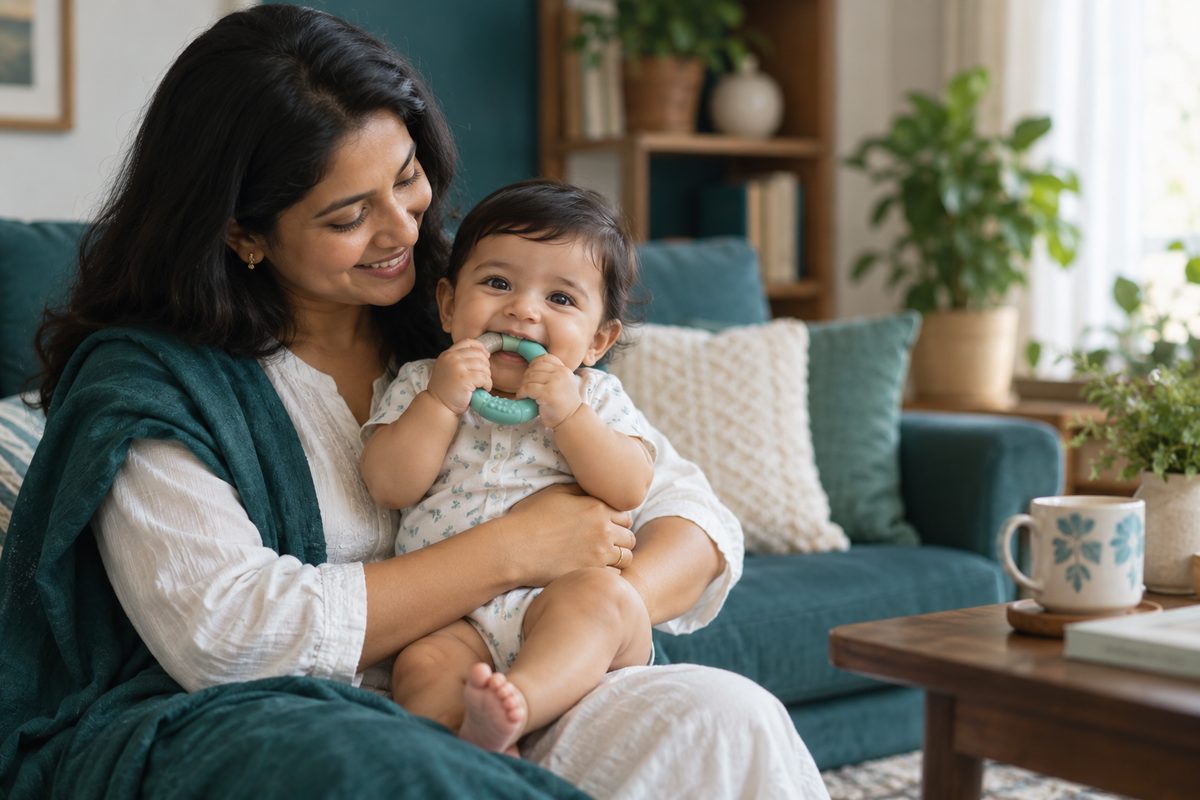
Teething symptoms usually include drooling, chewing, tender gums and a fussier baby, but they should stay fairly mild. Safe comfort measures often help, and a high fever, diarrhoea or a significant rash should not be blamed on teething.
When do babies start teething?
Most babies get their first tooth at around 6 months, but there is a wide normal range. A first tooth can appear as early as about 4 months or as late as 12 months. So if your friend's baby has two teeth at 5 months and your 9-month-old still has none, that alone doesn't mean something is wrong.
There isn't one exact baby teething age. The usual first tooth age is around the middle of the first year, and the lower front teeth often arrive first. Teeth then come through in stages until all 20 baby teeth are usually present by about 2.5 to 3 years.
Teething is not continuous for that whole period. Your baby may have a few uncomfortable days around one tooth, settle again, then become fussy later when another tooth is moving through the gum.
Roughly when do baby teeth come in?
The timing below is only a guide. Children can be earlier or later and still be healthy.
| Baby teeth | Approximate age they may appear |
|---|---|
| Lower front teeth | 6 to 10 months |
| Upper front teeth | 8 to 12 months |
| First molars | 13 to 19 months |
| Canines | 16 to 23 months |
| Second molars | 23 to 33 months |
If your baby has no teeth by around 12 months, it is reasonable to mention it at a dental or paediatric check-up. In most cases, late eruption is simply part of normal variation.
What are the real teething symptoms?
The common teething symptoms are usually local and mild. You may notice more drooling, a strong urge to chew, swollen or tender gums, irritability, unsettled sleep and a slight rise in temperature. Your baby may want to bite a spoon, toy, finger, cloth or almost anything within reach.
Some babies eat a little less for a day or two because the gums are sore. Others seem hardly bothered.
A slightly raised temperature can happen around teething, but true fever is different. Teething fever is a phrase parents often use, but teething should not cause a high fever. It also should not cause diarrhoea or a true rash.
If your child has a high temperature, looks unusually sleepy, is feeding poorly, has fewer wet nappies, has persistent diarrhoea or develops an unexplained rash, speak to a doctor. Don't assume these symptoms are "just teething" because a tooth happens to be coming through at the same time.
Drool can irritate the skin around the mouth and chin, which is different from teething causing a rash. Gently pat the damp skin dry rather than rubbing it repeatedly.
What gives safe teething relief for babies?
Simple measures are usually the best place to start. You don't need to numb the gum or put strong substances on it.
- Offer a clean chilled teething ring, not a frozen one. You can also let your baby chew a cool, clean washcloth, gently massage the sore gum with a clean finger, and give extra cuddles and comfort. If your baby is clearly uncomfortable, paracetamol should only be given in a dose advised for your child's age and weight by a doctor or other qualified clinician.
A chilled teething ring can feel soothing because cool pressure calms the tender gum. Frozen rings are different. They can become very hard and painfully cold, which may injure delicate gum tissue.
If your baby is chewing everything, check toys and teethers for loose parts, cracks or damage. Wash them regularly, especially when they are being dropped on the floor and put straight back into the mouth.
Are teething gels safe?
Parents often ask us about teething gel safety because gels are easy to buy and can sound like a quick fix. For babies and young children, avoid teething gels containing benzocaine or lignocaine unless a doctor or dentist has specifically advised a suitable product for that child.
These numbing medicines can cause harmful side effects in young children, and a gel can also be swallowed rather than staying on the gum. "Natural" on the label does not automatically mean a product is suitable for a baby either.
If you are unsure about a gel, drops or powder, take the packet to your child's doctor or dentist before using it.
What should I avoid during teething?
Do not put honey on a pacifier, teether or your finger for a baby under 1 year. Honey can contain spores that are unsafe for infants.
Amber teething necklaces are also best avoided. They do not have a proven teething benefit and can create choking or strangulation risks. Babies should not sleep wearing necklaces or cords.
Do not rub alcohol or spirits on the gums. Avoid hard foods or pieces that can break off and become a choking hazard. If you offer food for chewing once your baby is developmentally ready for solids, it should be appropriate for the child's age, texture skills and supervision.
It is also better not to keep trying different remedies simply because the baby remains irritable. If the discomfort seems severe, lasts longer than expected or comes with other symptoms, get the child checked.
When should I call a doctor instead of blaming teething?
Teething discomfort should be manageable and your child should still look generally well.
A high fever, significant diarrhoea, repeated vomiting, breathing difficulty, marked lethargy, signs of dehydration, severe pain or an unexplained rash needs medical assessment. Ear pulling can happen when a baby is tired or teething, but it can also occur with an ear infection, so persistent ear pain or fever deserves a check.
If a very young baby develops a fever, seek medical advice rather than treating it as teething.
What should I do when the first tooth appears?
Start cleaning from the first tooth, not when the mouth is "full of teeth". Use a small, soft infant toothbrush and a rice-grain smear of fluoride toothpaste. Brush gently twice a day, especially before bed.
You can read our guide to caring for a child's first teeth for the day-to-day routine, including brushing and feeding habits.
Once teeth are present, frequent sugary drinks, sweetened milk and repeated snacking can increase the risk of decay. Baby teeth matter for eating, speech, appearance and holding space for the adult teeth. Our guide to cavities in milk teeth explains what early decay can look like and why it is better to treat it early.
When should my baby first see a dentist?
A good target is the first birthday, or within six months of the first tooth appearing, whichever comes first. The first visit is usually simple. We look at the teeth and gums, talk about brushing, fluoride, feeding and teething, and help the child get used to the dental setting.
If you are looking for a practice that regularly sees young children, our guide to choosing a kids' dentist explains what parents can look for. You can also read about our children's dentistry services.
You do not need to wait for a problem. Early visits give you a chance to ask about tooth eruption, thumb sucking, bottles at bedtime, brushing battles or anything else that is worrying you.
If your baby's first teeth are coming through and you would like them checked, you can book your baby's first check with Haihyvanshi Dental Clinic & Implant Centre on IIM Road, Lucknow.
Frequently Asked Questions
Can teething cause a fever of 101 or 102°F?
Teething may be linked with a slight rise in temperature, but it should not cause a high fever such as 101 or 102°F. If your baby has a true fever, especially with poor feeding, unusual sleepiness, vomiting, diarrhoea or fewer wet nappies, contact a doctor rather than assuming teething is the cause.
Is it normal for a 9-month-old baby to have no teeth?
Yes, it can still be normal. First teeth commonly appear around 6 months, but a range from about 4 to 12 months is common. If no tooth has appeared by around the first birthday, mention it at your baby's dental or paediatric check-up so growth and tooth development can be reviewed.
Can I give my baby a frozen teething ring?
A chilled teething ring is a safer choice than a frozen one. Freezing can make the ring very hard and extremely cold, which may hurt the gums. Keep the teether clean, inspect it for damage, and supervise your baby while using it. A cool, clean washcloth is another simple option.
Do I need to brush a baby's first tooth?
Yes. Start brushing as soon as the first tooth appears. Use a soft infant toothbrush with a rice-grain smear of fluoride toothpaste and brush gently twice a day. Early brushing helps your baby get used to the routine and begins protecting the tooth from decay from the moment it is exposed in the mouth. Add a clear medication safety noteMake the relief advice easier to scanStrengthen the Lucknow clinic connection