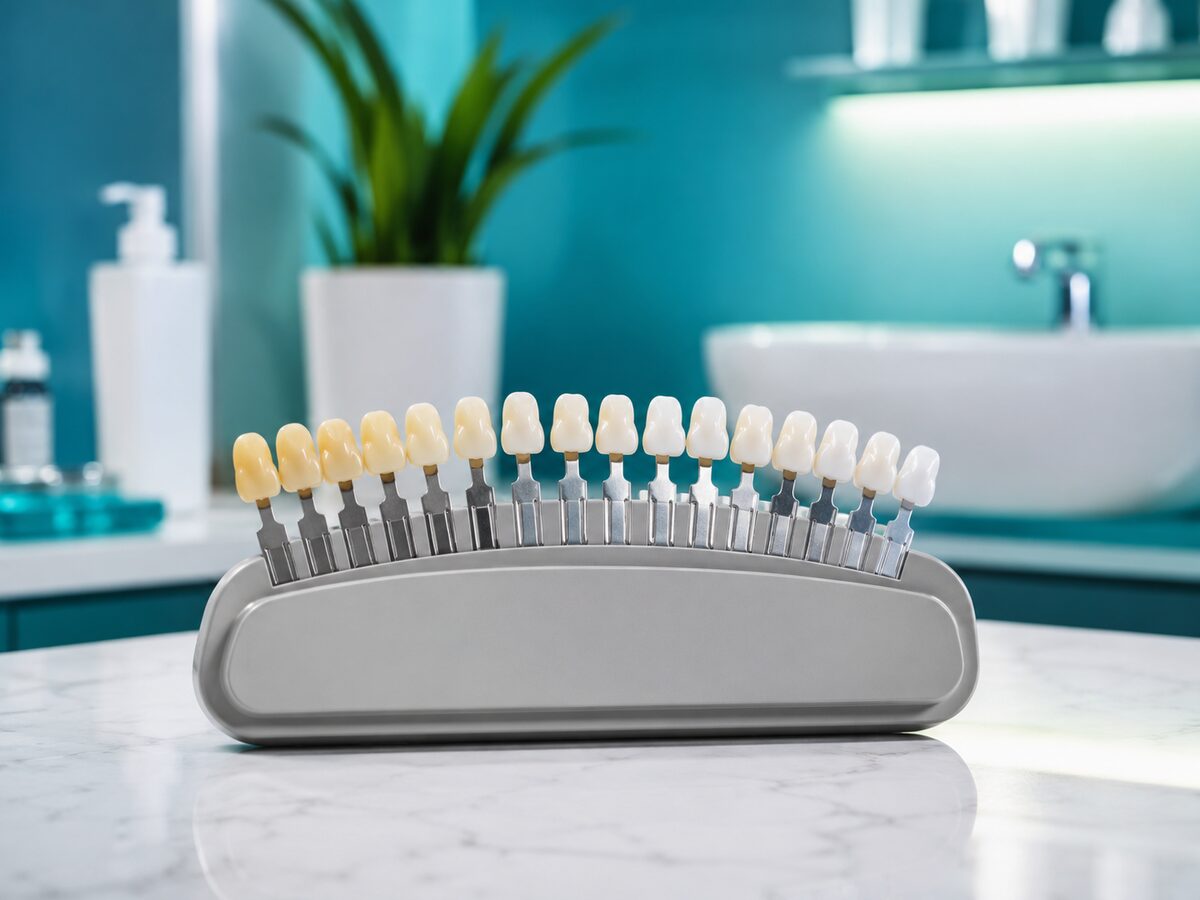
Yes, yellow teeth whitening can brighten most smiles, but it depends on why your teeth are yellow in the first place. Surface stains from tea, coffee, and tobacco lift well. Yellow that comes from inside the tooth is a different story. Here's how to tell which kind you've got and what actually works for each.
Can yellow teeth become white again?
Most of the time, yes. Yellow teeth whitening genuinely works for the everyday yellowing that comes from tea, coffee, tobacco, and age. But there's a catch worth knowing before you spend money on it. Not all yellow is the same, and not all of it responds to whitening. One of the more useful teeth whitening facts is this: the trick is figuring out whether your stained teeth carry surface marks on the enamel or colour built into the tooth itself. That one distinction decides what will and won't help you.
So let's break yellow teeth into two types, because the fix is different for each.
Extrinsic stains: where yellow teeth whitening shines
Extrinsic stains sit on the outside surface of the enamel. Think of the brown film that builds up from years of chai, filter coffee, red wine, gutka, or smoking. These are the stains whitening was made for. The bleaching agent breaks down the coloured molecules sitting on and just inside the enamel, and the tooth brightens, often by several shades.
A professional cleaning, what dentists call scaling and polishing, removes a surprising amount of this surface stain on its own, before any whitening even starts. Many patients who think they need whitening just need a good clean. After that, in-office whitening can take the colour several shades lighter in a single sitting. Our guide to professional teeth whitening covers how many shades you can realistically expect.
There's a home route too. Dentist-supplied custom trays with a gel work more slowly over a couple of weeks but reach a similar result, and they cost less than the in-office sitting. The shop-bought strips and charcoal pastes are a different matter. The strips give mild results at best, and charcoal is abrasive enough to scratch enamel, which over time makes teeth look more yellow, not less. So natural surface stains have good options, just be choosy about which one.
Intrinsic stains: the kind whitening struggles with
Intrinsic stains come from inside the tooth, in the dentin layer beneath the enamel. And these don't respond to whitening the same way, because the colour isn't sitting on the surface where the bleach can reach it.
Where do intrinsic stains come from? A few places. Certain antibiotics like tetracycline taken in childhood can leave grey or banded discolouration. Too much fluoride during tooth development can cause white or brown mottling, called fluorosis. A tooth that's had trauma or a dead nerve can darken on its own. And simple ageing thins the enamel, letting the naturally yellow dentin underneath show through more. Standard whitening makes little difference to these. You'd be bleaching the outside while the colour lives on the inside.
So what fixes intrinsic staining?
When whitening can't reach the problem, you cover it instead. Veneers, thin porcelain shells bonded to the front of the teeth, hide intrinsic stains completely and are the usual answer for deep tetracycline staining or a badly discoloured front tooth. Composite bonding is a lower-cost option for one or two teeth. For a single dead, darkened tooth, there's a specific technique called internal bleaching done from inside the tooth after a root canal. Different problem, different tool. A checkup tells you which one you actually need.
What whitening can't fix, full stop
Worth being clear about this so nobody's disappointed. Whitening doesn't change the colour of crowns, veneers, fillings, or bridges. These are made of ceramic or composite and don't bleach. So if you have a white filling on a front tooth and you whiten the rest, the filling will suddenly look darker by comparison, and you may need it replaced to match. Whitening also won't fix stains it can't reach, like the intrinsic ones above, and it won't make teeth unnaturally bright. The goal is your teeth at their natural best, not a fluorescent white.
Will the yellow come back?
Honestly, a bit, over time, if the habits that caused it continue. Whitening isn't permanent. If you go straight back to 4 cups of strong chai a day plus tobacco, the colour creeps back within months. The biggest culprit by far is smoking, which restains teeth fast and aggressively. Our piece on smoking and oral health explains why whitening is almost pointless while you're still smoking. Cut down the staining inputs, get a polish twice a year, and the results hold far longer.
So which kind of yellow do you have?
If your yellow is from surface stains, the common case, then whitening works well and often dramatically. If it's built into the tooth from medication, trauma, or ageing, whitening alone won't cut it, and veneers or bonding are the better route. You can't always tell which you have just by looking in the mirror, and guessing wrong wastes money. A quick look from a dentist sorts it in minutes. Our teeth whitening page walks through the options, and a checkup will tell you which one fits your particular yellow.
Frequently Asked Questions
Will whitening work on my yellow teeth?
Probably, if the yellow is from surface stains like tea, coffee, or tobacco, which is the most common kind. Those respond well to professional whitening. If the colour comes from inside the tooth, due to medication, trauma, or ageing, whitening won't help much, and you'd need veneers or bonding instead. A dentist can tell which type you have in minutes.
What's the difference between intrinsic and extrinsic stains?
Extrinsic stains sit on the outer enamel and come from food, drink, and tobacco, and whitening removes them well. Intrinsic stains are inside the tooth, from things like childhood antibiotics, fluorosis, a dead nerve, or thinning enamel with age. Intrinsic stains don't bleach away and usually need a cover like veneers.
Why didn't my filling whiten with the rest of my teeth?
Whitening only works on natural tooth, not on fillings, crowns, or veneers, which are ceramic or composite. So when you whiten, any existing white filling stays the same shade and can end up looking darker than the brightened teeth around it. You may need that filling replaced afterwards to match the new colour.
How long do whitening results last?
It varies, but typically several months to a couple of years, depending on your habits. Heavy tea, coffee, and especially smoking bring the yellow back faster. A professional polish twice a year and cutting down on staining drinks will stretch the results considerably.