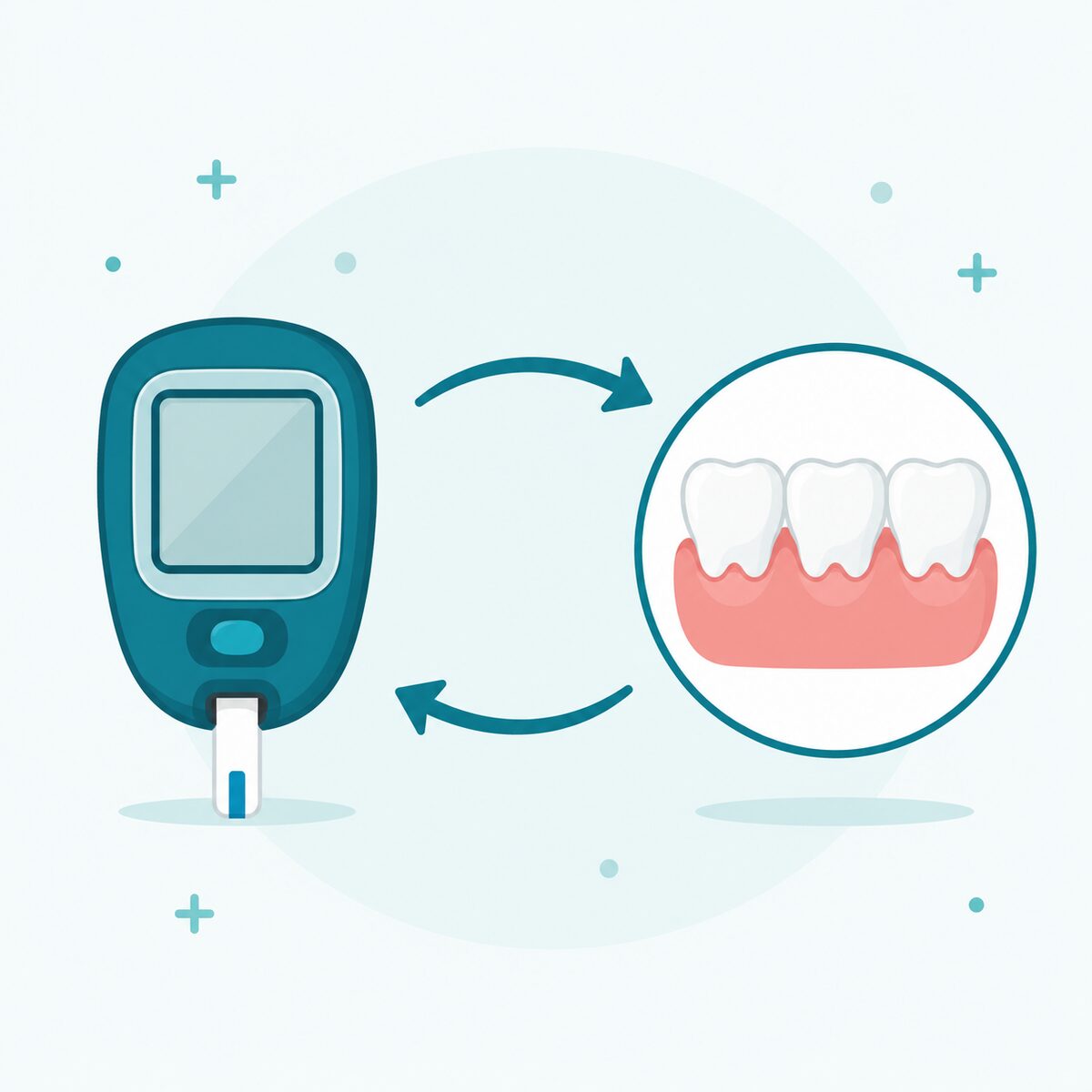
Diabetes and gum disease are tied together more tightly than most people realise, and the link runs both ways. High blood sugar makes gum disease worse, and gum disease in turn makes blood sugar harder to control. The encouraging part is that treating one helps the other.
How diabetes and gum disease feed each other
If you have diabetes, you're more likely to get gum disease, and it tends to be more severe. And if your gums are badly infected, that inflammation can push your blood sugar up, making your diabetes harder to manage. Each one makes the other worse. That's why this is called a two-way link, and it's why diabetes oral health deserves more attention than it usually gets.
Most people with diabetes know to watch their eyes, feet, and kidneys. The mouth rarely makes that list. But your gums are just as affected by blood sugar, and they're often the first place trouble shows up.
Why high blood sugar harms your gums
High blood sugar does a few things that work against your gums. It feeds the bacteria in plaque, since sugar in your saliva gives them more to live on. It also weakens your body's ability to fight infection, so a gum problem that a non-diabetic might shrug off can take hold and spread. And it slows healing, which is why a diabetic's gums recover more slowly after any treatment.
On top of that, poorly controlled diabetes tends to cause a dry mouth, and saliva is your natural defence that washes away bacteria and food. Less saliva means more buildup. These effects stack up, which is why diabetics get more cavities, more gum infections, and slower recovery.
The signs to watch for
Gum disease is sneaky because it's often painless until it's advanced. Keep an eye out for gums that bleed when you brush, that look red or puffy, that have pulled back from the teeth, or bad breath that won't shift. If your teeth feel loose, that's a later warning. Don't wait for pain. The piece on bleeding gums causes goes through the early signals in more detail.
The other direction: how gum disease raises blood sugar
Most people don't expect this one. A serious gum infection isn't just local. The inflammation releases substances into your bloodstream that interfere with how your body uses insulin. That makes your blood sugar harder to control, which can show up as a higher HbA1c reading despite your diet and medication staying the same.
And here's the genuinely useful flip side. Studies have found that treating gum disease, getting a proper deep cleaning and clearing the infection, can actually improve blood sugar control and lower HbA1c for some people. So looking after your gums isn't separate from managing your diabetes. It's part of it.
What you can do about it
A few habits make most of the difference.
- Keep your blood sugar as well controlled as you can. This protects your gums directly.
- Brush twice a day with a soft brush and floss once daily, without fail.
- See your dentist more often than twice a year. Every 3 to 4 months is wise for diabetics, so problems are caught early.
- Get a professional cleaning done when there's tartar buildup, since that's what keeps gum inflammation going.
- Tell your dentist you're diabetic and roughly what your recent HbA1c is. It changes how your treatment is planned and timed.
- If you smoke or use tobacco, stopping helps enormously, because it stacks on top of the diabetes risk.
If gum disease has already set in, a deep cleaning called scaling and root planing is usually the first step. It clears the infection below the gumline and lets the gums heal. For a diabetic, prompt gum disease treatment isn't optional housekeeping, it's part of keeping your blood sugar steady. The guide on scaling and root planing explains exactly what that involves and why it works. For ongoing gum care, the clinic's periodontal treatment covers the full range, from cleanings to managing more advanced cases.
A word on timing treatment
If your sugar is very poorly controlled at the moment, your dentist may want to coordinate with your physician before bigger procedures, because healing is slower and infection risk is higher when HbA1c is high. This isn't a refusal, it's just sensible sequencing. Morning appointments often suit diabetics better too, when sugar levels tend to be more stable and you've eaten and taken medication as usual.
And a small but useful tip: carry something sweet to your appointment in case your sugar dips while you're in the chair. Eat before you come, take your usual medication, and let the team know if you start feeling shaky or unwell at any point. A clinic used to treating diabetics will plan the appointment around all this, so you're never put in a risky spot.
What it adds up to
Diabetes and gum health pull on each other in both directions, so caring for one supports the other. Control your sugar, keep up daily brushing and flossing, see your dentist every few months, and treat gum infections promptly. If you're diabetic and your gums have been bleeding or sore, don't put it off. Book a check through the periodontal treatment service and get ahead of it.
Frequently Asked Questions
How are diabetes and gum disease connected?
The link works both ways. High blood sugar weakens your gums' defences and feeds the bacteria that cause infection, so diabetics get gum disease more often and more severely. In turn, a serious gum infection raises inflammation that makes blood sugar harder to control. Each one worsens the other.
Can treating gum disease improve my blood sugar?
It can, for some people. Studies have shown that clearing a gum infection with proper deep cleaning can improve blood sugar control and lower HbA1c. So looking after your gums isn't separate from managing diabetes, it's actually part of it. It's worth taking seriously.
How often should a diabetic see the dentist?
More often than the usual twice a year. Every 3 to 4 months is sensible, so any gum trouble is caught and cleared early before it can affect your blood sugar. Tell your dentist you're diabetic and roughly what your recent HbA1c is, since it shapes how treatment is planned.
What are the early signs of gum disease I should watch for?
Gums that bleed when you brush, look red or puffy, or have pulled back from the teeth. Persistent bad breath is another sign, and loose teeth are a later warning. Gum disease is often painless until it's advanced, so don't wait for pain to get it checked.