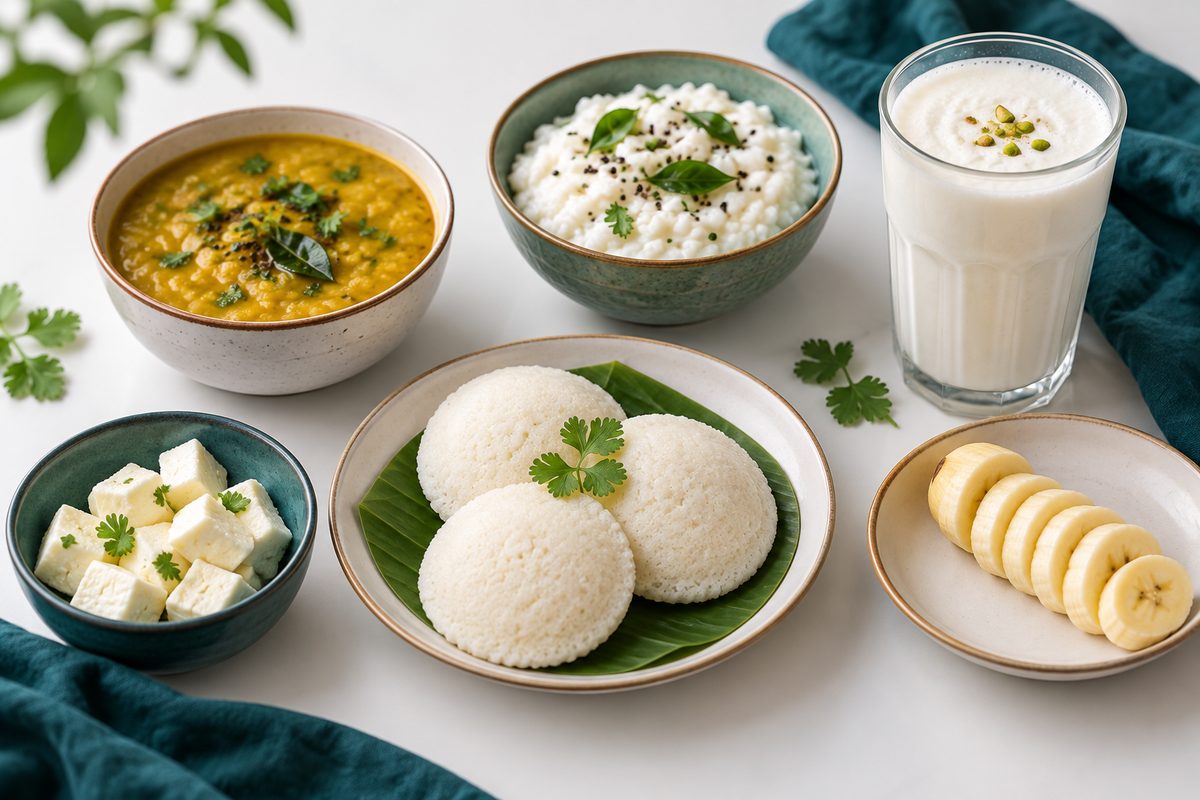
Food to avoid with braces mainly means anything very hard, sticky or difficult to bite, because these foods can loosen brackets or bend wires. In the first few days, choose softer meals and change how you eat firmer foods rather than avoiding every favourite dish.
What should you eat in the first week with braces?
The first few days after braces are fitted can feel quite different. Your teeth may be sore when you bite, and the inside of your cheeks may need time to get used to the brackets. This is when a softer braces diet helps most.
You don't need special food. Ordinary home meals work well if they are soft, moist and easy to chew. Dal with soft rice, khichdi, curd rice, idli, soft upma, daliya, well-cooked vegetables and soft paneer are all practical choices. Bananas are easy to manage, and smoothies can help when chewing feels uncomfortable.
As the soreness settles, gradually return to normal meals. The aim isn't to stay on soft food for months. It is to protect the brackets and avoid strong biting forces while your mouth adjusts.
If you're still deciding between treatment options, our guide to braces and aligners explains how the two approaches work.
Can I eat roti with braces?
Yes, you can eat roti with braces. The main change is how you eat it.
Instead of taking a large bite and pulling with your front teeth, tear the roti into small pieces and chew mainly with the back teeth. Do the same with paratha. A soft paratha in smaller pieces is easier than biting into a thick, crisp edge.
Very dry or overcooked roti can feel uncomfortable during the first week. If needed, soften it with dal, curd or sabzi. Once your teeth feel better, normal roti is usually fine if you avoid forceful biting with the front teeth.
Which Indian foods are safer with braces?
Most Indian food with braces is manageable if you think about texture and bite size. Soft food is easiest. Firmer food is often fine if you cut it first. Very hard, sticky or chewy food is more likely to cause trouble.
| Enjoy freely | Eat with care | Avoid |
|---|---|---|
| Dal, khichdi, curd rice, idli, soft upma | Roti and paratha torn into small pieces | Chikki and hard brittle sweets |
| Soft paneer, soft rice, well-cooked sabzi | Apples cut into thin slices | Toffees and sticky sweets |
| Bananas, papaya, ripe mango | Carrots cut into thin slices or cooked | Chewing gum |
| Daliya, oats, soft poha | Corn removed from the cob | Supari |
| Curd, unsweetened lassi, smoothies | Chicken taken off the bone | Hard nuts |
| Soft bread without a hard crust | Firmer fruits cut into small pieces | Ice, popcorn and hard crusty bread |
| Well-cooked rajma or chole | Soft dosa or uttapam cut into pieces | Bhutta bitten directly off the cob |
A useful rule is simple. If a food is hard enough that you have to bite forcefully with the front teeth, cut it, soften it or choose something else.
Don't bite straight into a whole apple. Slice it thinly and chew with the back teeth. Carrots can be grated, cooked or cut into thin slices. Eat corn off the cob rather than biting into bhutta. If you eat chicken, remove it from the bone first.
What food to avoid with braces completely?
The biggest troublemakers are foods that can snap a bracket off the tooth, bend a wire or get tightly packed around the appliance.
Chikki is a common example because it is hard and brittle. Sticky toffees can pull on brackets. Chewing gum can wrap around wires. Hard nuts, ice and popcorn kernels can place sudden pressure on the braces. Supari is also unsuitable because it is hard to bite and chew.
Hard crusty bread can cause trouble if you bite into it directly. So can biting pens, pencils or nails. They aren't foods, but they can damage braces in the same way.
You don't need to worry about every meal. Just avoid using your front teeth to crack, tear or pull hard things.
Are sweets and fizzy drinks allowed with braces?
They are best kept occasional.
Sugar doesn't usually break a bracket, but braces create many small areas where plaque can collect. Frequent sweets, sweetened drinks and fizzy drinks raise the risk of tooth decay and chalky white marks around the brackets. These marks may become noticeable once the braces come off.
If you have something sweet, it is better to have it with a meal rather than snack or sip on it repeatedly through the day. Rinse with water afterwards and clean your teeth well when you can.
Food choices and cleaning habits work together. A careful braces diet won't help much if plaque stays around the brackets for long periods.
How should you clean your teeth after eating?
Food often catches around brackets and under the wire, especially rice, leafy vegetables and fibrous foods. A quick look in the mirror after meals helps.
Rinse your mouth thoroughly with water after eating. Brush around the gum line, above and below each bracket, and around the wire. An interdental brush can clean small spaces that an ordinary toothbrush misses.
A small travel kit is useful for school, college or work. Carry a toothbrush, toothpaste, a small interdental brush and orthodontic wax. Even when you cannot brush immediately, rinsing well with water is better than doing nothing.
If you're unsure about your technique, our article on common brushing mistakes explains habits that can leave plaque behind.
What should you do if a bracket breaks or a wire pokes?
A broken bracket should be checked, but it is usually manageable until you speak with the clinic.
If a bracket has come loose but is still attached to the wire, leave it in place and don't play with it. If a wire is rubbing your cheek, place a small amount of orthodontic wax over the sharp area. Don't try to cut the wire yourself with scissors, nail clippers or other household tools.
Call the clinic and explain what has happened. We can tell you whether you need an earlier visit or whether it can wait until the next scheduled appointment. If this has happened now, you can call us about a broken bracket.
Repeated breakages can happen because of hard foods or biting habits, so think about what you were eating when it happened.
Do adults need a different braces diet?
Not usually. The food rules are mostly the same for teenagers and adults. Adults may be eating at work, travelling more or having tea and snacks several times a day, so a small cleaning kit can be especially useful.
Our guide to braces for adults covers practical points about fitting treatment around work and daily life.
If cost is part of your planning, use our braces cost guide for current clinic information rather than relying on old estimates from friends or social media.
Do aligners have the same food restrictions?
No. Clear aligner users usually have fewer food limits because the trays are removed before eating. You should not chew food while wearing the trays.
Take the aligners out, eat your meal, then brush your teeth before putting them back in. Food or sugar trapped under an aligner for hours can raise the risk of decay and bad breath.
This difference is explained in our comparison of aligners vs braces. Aligners give you more freedom at mealtimes, but you still need to wear the trays for the number of hours your orthodontic plan requires.
A simple rule for everyday meals
You don't need to memorise a long list. Before you eat, ask whether the food is very hard, very sticky, or something you would normally bite and pull with the front teeth.
If the answer is yes, change the food or change the way you eat it. Cut fruit, tear roti, remove corn from the cob, take meat off the bone and avoid sticky sweets. That one habit can prevent many avoidable problems with braces.
We often see patients in Lucknow who are surprised by how quickly eating feels normal again once the first-week soreness settles. If you're unsure about a particular food, or something in the braces feels loose or sharp, book a check at Haihyvanshi Dental Clinic & Implant Centre on IIM Road.
Frequently Asked Questions
Can I eat roti and sabzi after getting braces?
Yes. Roti and most sabzi are fine with braces. In the first few days, choose softer sabzi and tear the roti into small pieces instead of biting and pulling with your front teeth. If the roti feels too dry while your teeth are sore, soften it with dal, curd or gravy.
How long do I need soft food after braces are fitted?
Most people prefer soft food for a few days, but there is no fixed number of days for everyone. Eat according to comfort. As the soreness reduces, gradually return to normal meals while still avoiding very hard and sticky foods that could loosen a bracket or bend a wire.
Can I eat apples, carrots and nuts with braces?
Apples and carrots are usually fine if you cut them into thin slices or small pieces and chew with the back teeth. Hard nuts are more likely to damage brackets, especially if you bite them forcefully. During the first week, cooked vegetables and softer fruits are usually more comfortable.
What should I do if food breaks a bracket?
Stop eating anything hard, check whether the bracket is still attached to the wire, and avoid pulling or twisting it. If it rubs your cheek, cover the area with orthodontic wax. Do not cut the wire yourself. Contact the clinic so we can advise whether you need an earlier appointment.