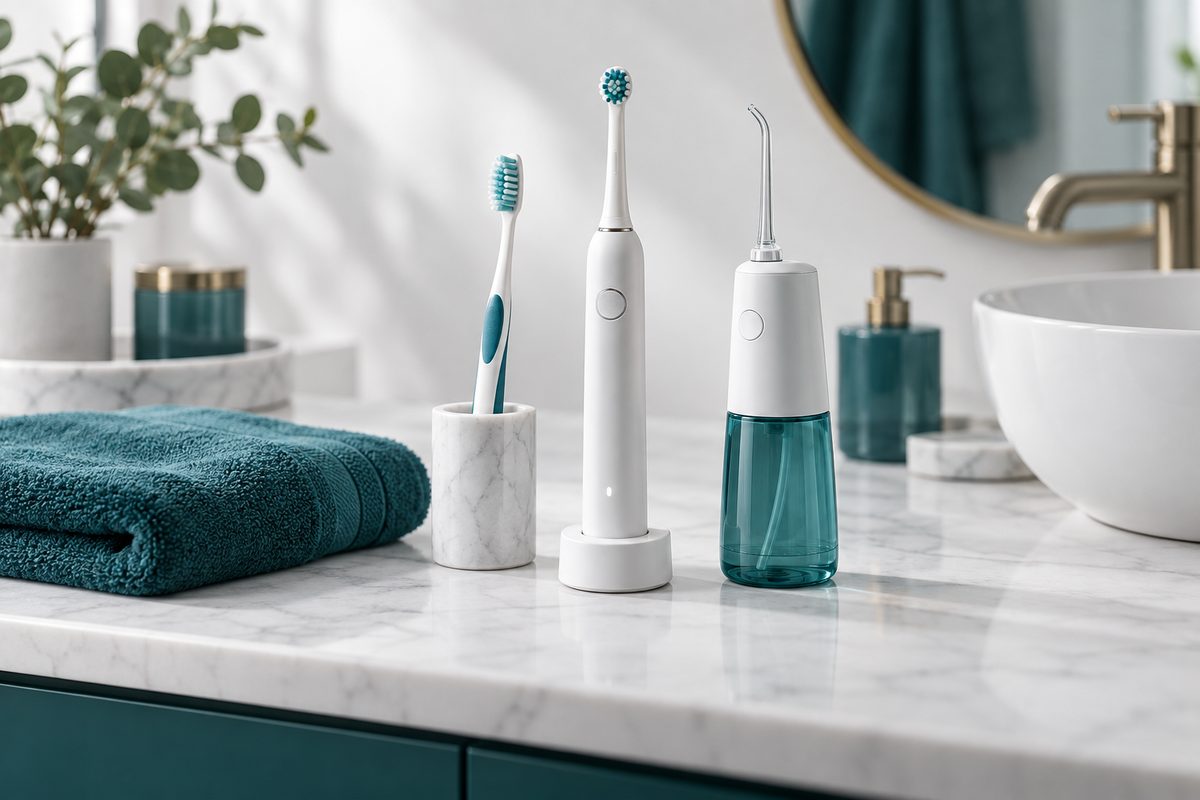
Electric vs manual toothbrush is a common question, but technique matters more than the price or technology of the brush. A soft manual brush used properly for two minutes twice a day is enough for many people, while an electric brush can make good brushing easier. A water flosser is particularly useful around braces, bridges and implants, or if ordinary floss never becomes a habit.
Which is better, an electric or manual toothbrush?
If you ask us this in our Lucknow clinic, the first answer is simple. A manual toothbrush can clean your teeth very well if you use it properly.
The trouble is that many people rush, press too hard, miss the gum line or repeatedly miss the same back teeth. An electric brush can reduce some of these problems by providing the brushing movement for you and helping you keep track of time.
So electric vs manual toothbrush isn't really a contest in which one tool always wins. Technique, regularity and gentle brushing matter more.
What does an electric toothbrush do better?
Electric brushes usually use either a rotating head or sonic movement. For many people, they tend to remove more plaque because they make consistent brushing easier.
They can be particularly helpful if you have braces, arthritis, reduced grip strength or limited hand movement. They're also useful for people who regularly finish brushing too quickly. Children may find an electric brush easier or more interesting to use, although an adult should still supervise younger children.
A two-minute timer is genuinely useful. A pressure sensor can also help if you scrub your teeth too hard. More pressure doesn't mean cleaner teeth, and aggressive brushing can irritate gums and contribute to wear near the gum line.
If you're choosing an electric toothbrush in India, you don't necessarily need multiple modes, an app or the most expensive model. A small comfortable head, timer, pressure sensor and replacement heads that are easy to find are usually more useful.
Is a manual toothbrush still good enough?
Yes. For many people, it is all they need.
Choose a soft bristle toothbrush with a head that comfortably reaches your back teeth. Brush for two minutes twice daily with fluoride toothpaste. Work around your mouth in the same order each time, including the outside, inside and chewing surfaces, so that you don't repeatedly miss one area.
Keep the pressure light, especially near the gums. If your bristles quickly become crushed or spread sideways, you may be brushing too hard.
Our guide to common brushing mistakes explains several small habits that can make a bigger difference than changing toothbrush brands.
What is the best toothbrush for gums?
For most people, the best toothbrush for gums is a soft brush used gently. That applies to manual and electric brushes.
Medium or hard bristles aren't normally needed for everyday cleaning. If your gums bleed, switching to a harder brush and scrubbing more aggressively isn't the answer. Plaque-related gum inflammation is a common cause, although bleeding can have other explanations too. Our guide to bleeding gums explains when it needs attention.
If you have gum recession, sensitivity, implants or previous gum treatment, your technique may need adjusting. At our clinic on IIM Road, we can show you where the bristles should sit and how lightly to brush.
Is a water flosser worth it?
For the right person, yes.
A water flosser directs a controlled stream of water around the gum line and between teeth. It can make cleaning much easier around braces, bridges and implants, where access with ordinary floss may be awkward.
It's also useful if you've repeatedly tried string floss and simply don't use it. A cleaning method you can follow regularly is more useful than floss sitting unused in a cupboard.
However, a water flosser doesn't automatically make every other interdental cleaning method unnecessary. String floss cleans tight contacts well because it can physically pass against the sides of neighbouring teeth. Interdental brushes can work particularly well in wider spaces and some areas affected by gum recession.
That's why the water flosser vs floss question doesn't always have an either-or answer. Some people benefit from using different tools in different parts of the mouth.
Manual brush, electric brush or water flosser?
| Tool | What it does well | Limitations | Who it suits |
|---|---|---|---|
| Manual toothbrush | Cleans very well with good technique, easy to carry, low ongoing cost | Depends more on your technique and timing | Most adults and children who brush carefully |
| Electric toothbrush | Provides brushing movement, often has a timer and pressure sensor | Higher initial cost, needs charging, replacement heads create an ongoing cost | People who rush, have limited hand movement, wear braces or prefer guided brushing |
| Water flosser | Makes cleaning around braces, bridges, implants and difficult spaces easier | Doesn't replace toothbrushing, and tight contacts may still need floss | People with dental appliances, dental work, dexterity difficulties or a strong dislike of floss |
Replace a manual toothbrush or electric brush head about every three months, or sooner if the bristles become splayed. Electric replacement heads therefore add a regular running cost. Water flossers have a higher initial cost than floss or interdental brushes and may need replacement tips from time to time.
Do I still need floss if I have a water flosser?
You might.
If the contacts between your teeth are tight, string floss can still be useful. Wider spaces may suit an interdental brush better. A water flosser can be particularly convenient in complicated areas where threading floss is difficult.
During check-ups and cleaning, we can look at the actual spaces between your teeth and show you which tool fits where. This sort of advice can save you from buying devices that don't suit your mouth.
You also don't need to add mouthwash simply because you've upgraded your toothbrush. Mouthwash isn't a replacement for brushing or cleaning between the teeth. Some rinses have specific uses, but they should be chosen for a reason. Read our guide on whether you need mouthwash if you're unsure.
What should you buy for your own routine?
If you're a student or young adult with good hand movement and you already brush thoroughly, a good soft manual brush may be all you need. Spend your effort on technique rather than gadgets.
If you rush, press too hard or regularly struggle to brush for a full two minutes, an electric brush with a timer and pressure sensor can be a sensible upgrade.
If you have braces, a water flosser can make cleaning around brackets easier, but careful brushing is still needed. Your dentist or orthodontist may also recommend small interdental brushes for particular spaces.
For an older parent with arthritis, tremor or reduced grip strength, an electric toothbrush with a comfortable handle can reduce the amount of hand and wrist movement required. A water flosser may also help if bridges, implants or limited dexterity make cleaning between teeth difficult.
For children, use an age-appropriate soft brush. Manual and electric brushes can both work. The more important point is that a parent supervises brushing until the child can consistently clean every surface properly.
You can even bring your existing toothbrush or water flosser to an appointment. We can see how you're using it, point out areas you're missing and help you decide if another device is actually necessary. You can ask us at your next visit.
Your routine matters more than the gadget
A manual brush can do an excellent job. An electric brush can make good brushing easier. A water flosser can make difficult spaces easier to manage. None of them compensates for hurried or irregular cleaning.
Brush twice daily for two minutes with fluoride toothpaste, use soft bristles and clean between your teeth using a method that suits the spaces you have. Dental reviews also matter, because your needs can change with gum health, fillings, crowns, implants and age. Our guide explains how often to visit the dentist.
That's the practical answer we give our patients. Buy the tool that helps you follow a good routine consistently, rather than the one with the longest feature list.
Frequently Asked Questions
Is an electric toothbrush actually better than a manual toothbrush?
An electric toothbrush can make plaque removal easier for many people, particularly if you rush, press too hard or have difficulty moving your hands. A manual toothbrush can still clean extremely well when you use a soft head, light pressure and good technique for two minutes twice daily.
Can I use a water flosser instead of ordinary floss?
A water flosser can be very useful, especially around braces, bridges and implants. It may not clean every tight contact in exactly the same way as string floss. Some people benefit from using floss for tight spaces, interdental brushes for wider gaps and a water flosser where access is difficult.
Which toothbrush should I use if my gums bleed?
Start with a soft toothbrush and gentle pressure rather than trying to scrub the gums harder. Bleeding can occur with plaque-related gum inflammation, although other causes are possible. If bleeding continues despite regular cleaning, arrange a dental examination so the cause can be identified rather than simply changing brushes.
How often should I replace my toothbrush or electric brush head?
A useful general rule is about every three months, but replace it sooner if the bristles become bent, worn or splayed. If a new brush starts looking damaged within a few weeks, you may be pressing too hard. Reducing brushing pressure is usually more useful than repeatedly replacing worn brushes.