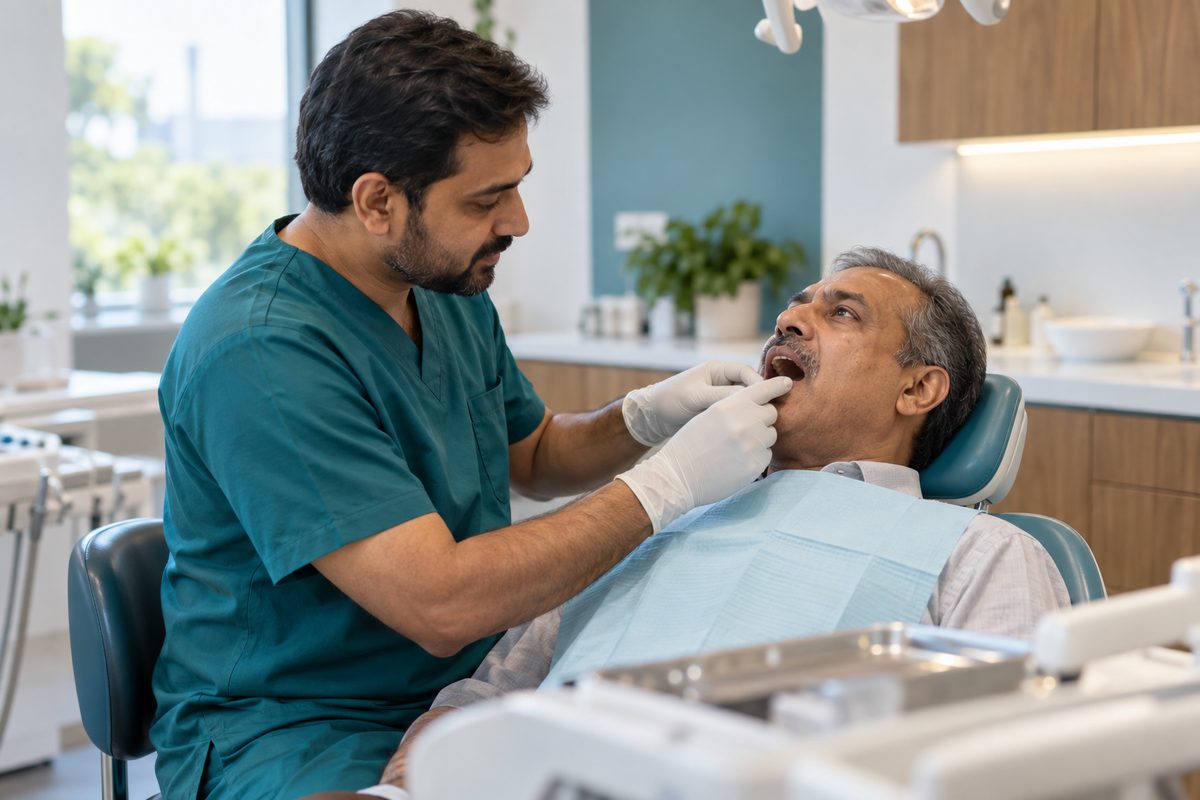
Loose teeth in adults are not normal, but a moving tooth does not always mean it has to be removed. The sooner the cause is found, the better the chance of stabilising the tooth and protecting the bone and gums around it.
Why is my adult tooth loose?
An adult tooth should feel firm when you bite, chew or touch it gently with your tongue. If you notice tooth shaking, a new gap, a change in your bite, or a tooth that seems to move when you eat, it needs a dental check.
The most common reason is gum disease. As gum disease progresses, infection and inflammation damage the tissues and bone that hold the tooth in place. A tooth may start to move only after quite a lot of support has already been lost, so waiting for pain is not a good guide.
Other causes include an injury, clenching or grinding, an abscess, or a bite that puts too much force on one tooth. During pregnancy, hormonal changes can sometimes make the gums more inflamed and teeth may feel slightly mobile. This is usually temporary, but it still deserves a check because pregnancy can also make existing gum problems more noticeable.
What causes loose teeth in adults?
Different causes often produce different clues. A dentist will usually examine the gums, check the bite, test the tooth and take an X-ray if needed to see how much bone support remains.
| Cause | Clues | Usual treatment |
|---|---|---|
| Gum disease with bone loss | Bleeding gums, bad breath, gum recession, pus, spaces opening between teeth | Deep cleaning, gum treatment, improved home cleaning, review of risk factors |
| Injury or trauma | Tooth became loose after a fall, hit, sports injury or biting something hard | Same-day assessment, bite check, possible splinting, monitoring the nerve and root |
| Teeth grinding or clenching | Morning jaw tightness, worn teeth, headaches, tenderness, several teeth feeling stressed | Bite assessment, habit control, a night guard in selected cases, management of teeth grinding |
| Abscess or infection | Pain, swelling, gum boil, bad taste, tenderness to biting | Treat the infection and the source, which may involve root canal treatment, drainage or gum care |
| Bite overload | One tooth hits first, pain when chewing, recent filling or crown, tooth feels sore rather than generally mobile | Bite adjustment if appropriate, then reassessment |
| Pregnancy-related gum changes | Swollen or bleeding gums during pregnancy, mild mobility without major bone loss | Gentle cleaning, professional gum care and review after pregnancy |
If your gums bleed when brushing, don't ignore it because bleeding can be an early sign that the gum tissues are inflamed. Our guide on bleeding gums explains what usually causes it and when it needs attention.
Can a loose tooth be saved?
Often, yes. The answer depends on why the tooth is moving, how much bone is left around it, whether there is infection, and how mobile the tooth has become.
If gum disease is the cause, the first aim is to control infection and inflammation. That may mean deep cleaning below the gum line, treatment of deeper pockets and better plaque control at home. Once the gums are healthier, some teeth become noticeably firmer. A tooth with severe bone loss may remain mobile even after the infection is controlled, but that does not automatically mean it must be removed.
If the tooth is being overloaded by your bite, a small bite adjustment may reduce the force on it. If grinding is part of the problem, a night guard may be advised after the bite and gums are checked.
Splinting loose teeth can also help in selected cases. A thin fibre or wire is bonded to the loose tooth and nearby stable teeth so they support each other. Splinting does not rebuild lost bone by itself. It is usually used together with treatment for the cause, not instead of it.
If an abscess is making the tooth mobile, treating the infection may improve stability. The exact treatment depends on whether the infection is coming from the nerve inside the tooth, the gums around it, or both.
How do diabetes and smoking affect a loose tooth?
Diabetes can make gum disease harder to control, especially when blood sugar is not well managed. Gum infection can also make blood sugar control more difficult. If you have diabetes and your teeth are becoming loose, tell your dentist about your recent blood sugar control and medicines. You can also read our guide to diabetes and gum disease.
Smoking is another major risk factor for gum-related loosening. It reduces the gums' normal healing response and can hide warning signs such as bleeding. Someone who smokes may have serious gum and bone damage even if the gums do not look very red.
What should I do if a tooth is shaking now?
Until you are examined, treat the tooth gently.
- Don't keep checking or wiggling it with your fingers or tongue. Chew on the other side, avoid hard and sticky foods, keep brushing carefully with a soft toothbrush, and clean between the teeth without forcing floss into a sore area. If the tooth became loose after an accident or a direct blow, arrange a dental visit the same day.
Don't stop cleaning because the tooth feels delicate. Plaque left around a loose tooth can make gum inflammation worse. Brush gently around the gum line and follow any cleaning method your dentist has already shown you.
Pain relief may make you more comfortable, but it does not treat the reason the tooth is moving. If there is swelling, pus, fever, a bad taste, or increasing pain, you should be seen promptly.
What happens at the dental visit?
The dentist will first ask when you noticed the movement and whether it started suddenly or gradually. We will check how much the tooth moves, look for bleeding or gum pockets, test the bite and examine nearby teeth.
An X-ray may be needed to check the bone level, root shape and signs of infection. In some cases, more than one problem is present. For example, gum disease may have reduced the tooth's support, while grinding is adding extra force every night.
Your loose tooth treatment is then based on the cause. That may include deep cleaning, gum care, treatment of an abscess, bite adjustment, a night guard or splinting. The aim is not simply to make the tooth feel tighter for a few days. The cause has to be controlled if the tooth is going to have a reasonable chance of staying useful.
When is a loose tooth too far gone to save?
Sometimes a tooth has lost too much support, has a root fracture, has severe infection that cannot be controlled, or is so mobile that it cannot function comfortably. In those situations, removal may be the safer option.
If a tooth has to be removed, replacement choices may include a bridge, a removable denture or an implant, depending on the condition of the gums, bone, nearby teeth and your medical history. If you're considering that route, our page on questions about implants explains the basics.
The main point is not to decide too early that a loose tooth is hopeless, and not to wait until it becomes impossible to treat. An early examination gives us more information and often more treatment choices.
When should I see a dentist?
If an adult tooth has started moving, arrange an appointment soon even if it does not hurt. If the looseness followed an accident, get it checked the same day. You should also be seen promptly for swelling, pus, fever, facial swelling, severe pain, or a tooth that suddenly becomes much looser.
For an assessment at Haihyvanshi Dental Clinic & Implant Centre on IIM Road, you can book an appointment. We can check why the tooth is moving, explain whether it can be saved, and discuss the next step without making promises before the tooth and supporting bone have been examined.
Frequently Asked Questions
Can a loose adult tooth become tight again?
It can, depending on the cause. A tooth loosened by inflammation, bite overload or a treatable infection may become firmer after treatment. If a lot of supporting bone has already been lost, some mobility may remain. The dentist needs to check the gums, bite and X-ray before giving a realistic answer.
Is it normal for a tooth to move a little?
Adult teeth can have tiny natural movement, but movement that you can feel, see or notice while chewing is not something to ignore. New gaps, a changed bite or a tooth that feels different from the others should be examined, especially if there is bleeding, swelling or gum recession.
Does a loose tooth always need to be removed?
No. Many loose teeth can be treated with gum care, infection treatment, bite adjustment, a night guard or splinting, depending on the cause. Removal is usually considered when the tooth has too little support, a severe fracture, uncontrolled infection or mobility that makes it unusable.
How quickly should I see a dentist for a loose tooth?
Book a dental check soon, even if there is no pain. If the tooth became loose after a fall, blow or other accident, get it assessed the same day. Swelling, pus, fever, facial swelling or rapidly increasing movement are also reasons to seek prompt dental care.